






How Offline AI Devices Are Enabling Fully Private, On-Device Intelligence Without the Cloud

How Offline AI Devices Are Powering Fully Private, On-Device Intelligence
Artificial intelligence is rapidly shifting from cloud-dependent systems to private, locally executed models. This transformation is not just a technical evolution — it represents a fundamental rethinking of how humans interact with intelligent machines. For years, the AI ecosystem has relied on massive cloud-based servers to process queries, run predictive models, and power increasingly complex language systems. But with the exponential growth of model compression, advanced edge chips, and on-device optimization, a new generation of offline AI devices has emerged.
These devices enable users to run sophisticated neural networks entirely on their hardware, without sending data to remote servers. The result is a new paradigm of AI that is faster, more secure, more reliable, and fundamentally private. And unlike cloud-based AI, offline systems allow users to retain complete control over their data — a capability that is becoming increasingly critical in a world where privacy, surveillance, and digital autonomy are deeply intertwined.
The Shift Toward Offline AI: Why It Matters
The movement toward offline AI is not happening in isolation — it is a direct response to growing user demands for autonomy and privacy. Over the last decade, consumers have become increasingly aware of how frequently their personal data is transmitted, stored, analyzed, or sold by cloud services. At the same time, advancements in miniaturization and computational efficiency have made powerful offline devices viable at consumer scale.

- Growing concerns over data privacy and security are driving adoption of local AI models.
- Offline AI reduces dependence on cloud infrastructure, preventing unnecessary data transmission.
Offline AI represents a return to user autonomy — a world where individuals own their data, control their devices, and interact with intelligence without oversight or exposure.
How On-Device Models Deliver Cloud-Free Intelligence
The ability to run advanced neural networks directly on small devices once seemed impossible. Large language models require immense computational resources, both for training and inference. Yet recent technological breakthroughs have dramatically changed the landscape.
Modern edge chips are capable of performing billions of operations per second while consuming minimal power. Combined with breakthroughs in model quantization, pruning, distillation, and hardware acceleration, offline AI devices can now run sophisticated systems without relying on remote servers.
- Modern edge chips enable neural networks to run locally with high efficiency.
- Compression techniques allow large language models to operate fully offline without performance loss.
Key Takeaway
The rise of offline AI is made possible by the convergence of efficient algorithms and powerful consumer-grade hardware. These innovations make private intelligence not only possible, but increasingly superior to cloud-dependent alternatives.
Key Benefits: Privacy, Speed, and Reliability
While convenience once drove cloud adoption, the advantages of offline AI are now equally compelling. Users benefit from faster interactions, reduced exposure, and independence from unpredictable networks.

- Data never leaves the device, ensuring total privacy.
- Instant responses with no latency from internet connections.
- AI features work even in remote or disconnected environments.
One of the most compelling advantages is the elimination of network dependency. Whether traveling, working in the field, or simply outside reliable coverage, offline AI continues to operate with full functionality. This reliability is particularly valuable in industries such as healthcare, emergency response, scientific exploration, and secure communications.
Real-World Use Cases for Offline AI Devices
Offline AI is not merely a technical curiosity — it is already transforming industries and consumer devices across the globe. The applications range from personal assistants to life-saving professional tools designed to function under constraints where cloud systems cannot operate.
- Wearables performing real-time health analysis without sharing data externally.
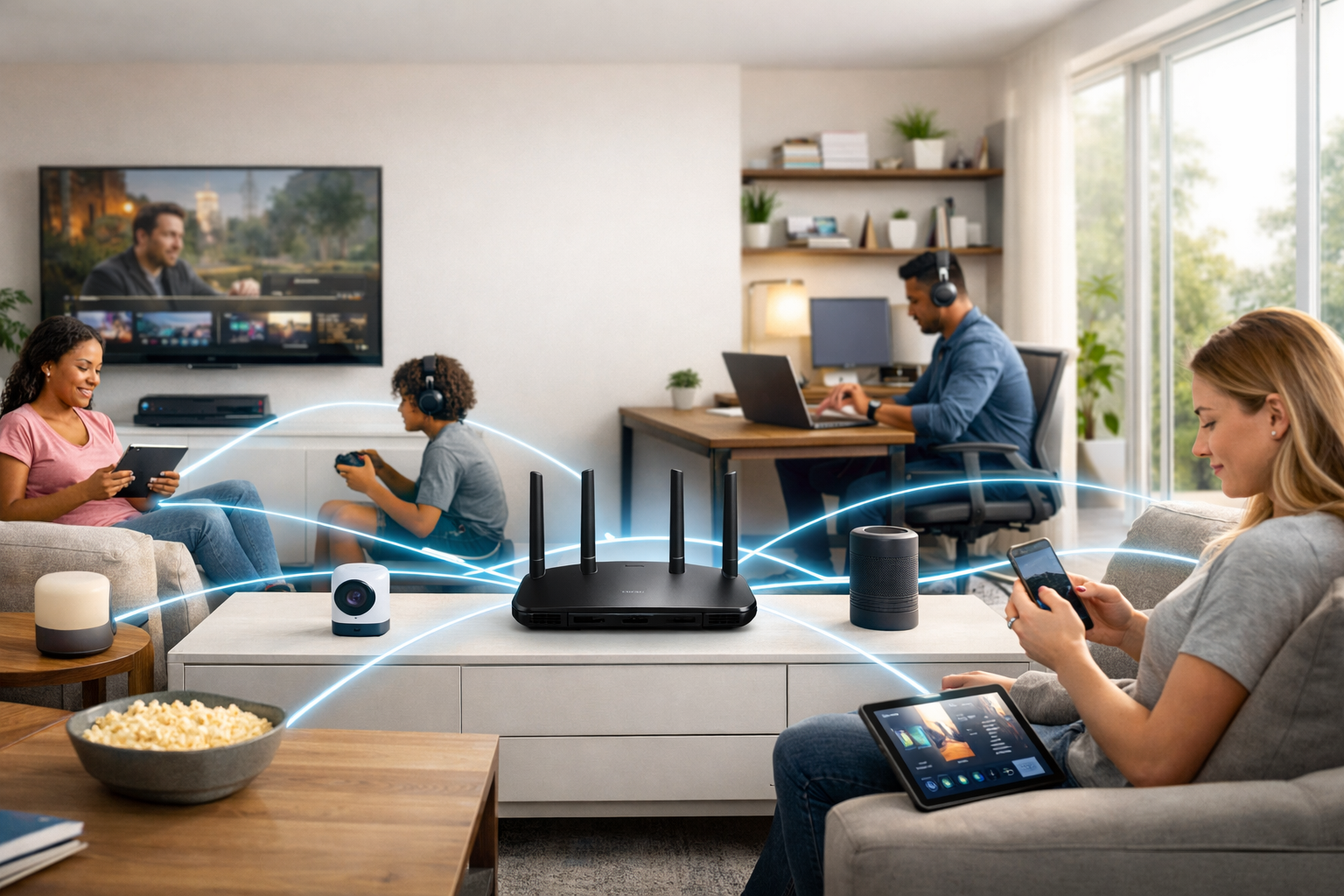
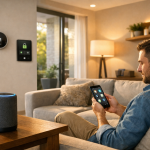
- Smart home devices that respond quickly while keeping user activity private.
- Portable assistants for travel, education, and fieldwork where internet access is limited.
In practice, offline AI wearables can monitor vitals, detect anomalies, and make predictive assessments without ever transmitting a medical profile to a third party. For privacy-conscious users, this represents a major leap in personal autonomy. Similarly, smart home devices can function without exposing daily routines, voice commands, or home layouts to cloud-based servers. The result is a smarter home that also respects boundaries.
Challenges Still Facing Offline AI Adoption
Despite rapid innovation, offline AI still faces hurdles. One challenge involves balancing model accuracy with hardware constraints. While compression techniques have improved dramatically, some large-scale models still require more memory and processing power than mobile or wearable devices can provide.
Another area of friction is model updates. Cloud AI models benefit from constant, quiet improvements, while offline devices must rely on explicit update mechanisms. Ensuring models stay current without relying on continuous connectivity remains an active area of research.
- Hardware limitations can restrict model size and complexity.
- Keeping on-device models updated without the cloud requires new distribution strategies.
Despite these challenges, the momentum behind offline AI continues to grow. Manufacturers, researchers, and developers are exploring federated methods, encrypted update packages, and hybrid schedules that allow users to download improvements only when they choose to — preserving privacy without sacrificing progress.
Conclusion: The Future of AI Is Private, Local, and User-Controlled
Offline AI devices mark a monumental shift in how intelligence is delivered and experienced. By removing the dependency on cloud servers, these devices give users unprecedented control over their personal information while enabling faster and more reliable interactions. As hardware advances and models become more efficient, the promise of fully private, on-device intelligence becomes increasingly attainable.
For individuals and organizations seeking autonomy, security, and resilience, offline AI represents the next major frontier. And as adoption accelerates, we are likely to see a new ecosystem of devices designed from the ground up to support private, personalized intelligence — without compromise.
Stay Ahead of the Offline AI Revolution
Learn more about emerging private, secure, on-device intelligence and the technologies making it possible.
Explore More Insights