









How Direct-to-Satellite Smartphone Connectivity Is Transforming Global Communication
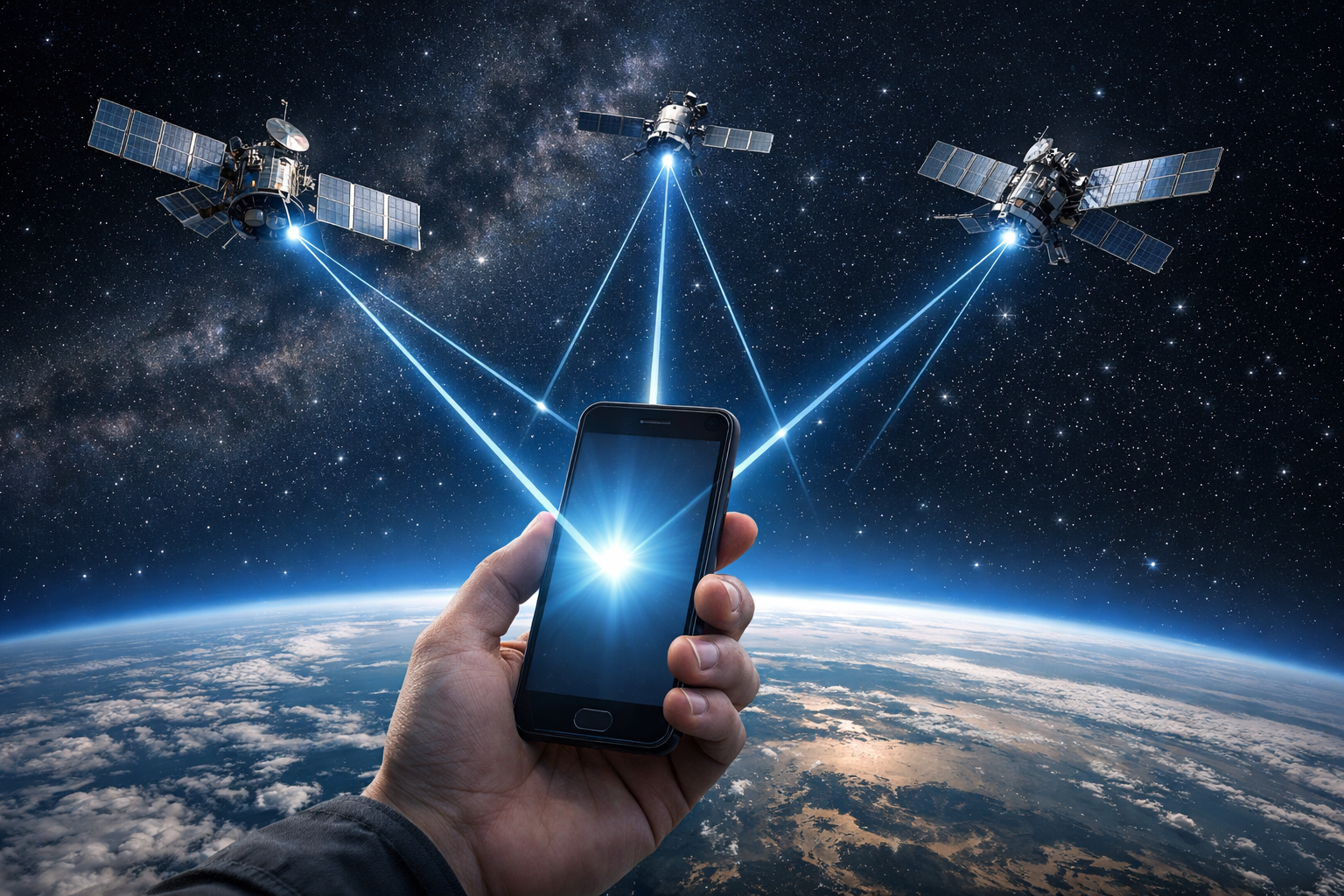
How Direct-to-Satellite Smartphone Connectivity Is Expanding Global Communication
For more than three decades, mobile communication has depended on a vast network of terrestrial cell towers. These towers have enabled billions of people to call, text, and access the internet from almost anywhere—so long as “anywhere” falls within the boundaries of cellular infrastructure. But as soon as you step onto a remote mountain trail, travel across an open ocean, or enter a disaster‑stricken region where towers are down, the limitations of traditional mobile networks become painfully clear.
Direct‑to‑satellite smartphone connectivity aims to change that. This emerging technology allows smartphones to communicate directly with satellites in low Earth orbit (LEO), eliminating the dependence on cell towers altogether. The result is a new era of communication that promises near‑global reach, greater resilience, and enhanced safety.
As major carriers, satellite operators, and smartphone manufacturers collaborate to make this technology mainstream, the world is moving closer to a future where losing cellular coverage becomes a rarity rather than the norm. This article explores the technology behind direct‑to‑satellite communication, why it matters, how it works, and how it might reshape our expectations of mobile connectivity.
What Is Direct-to-Satellite Smartphone Connectivity?
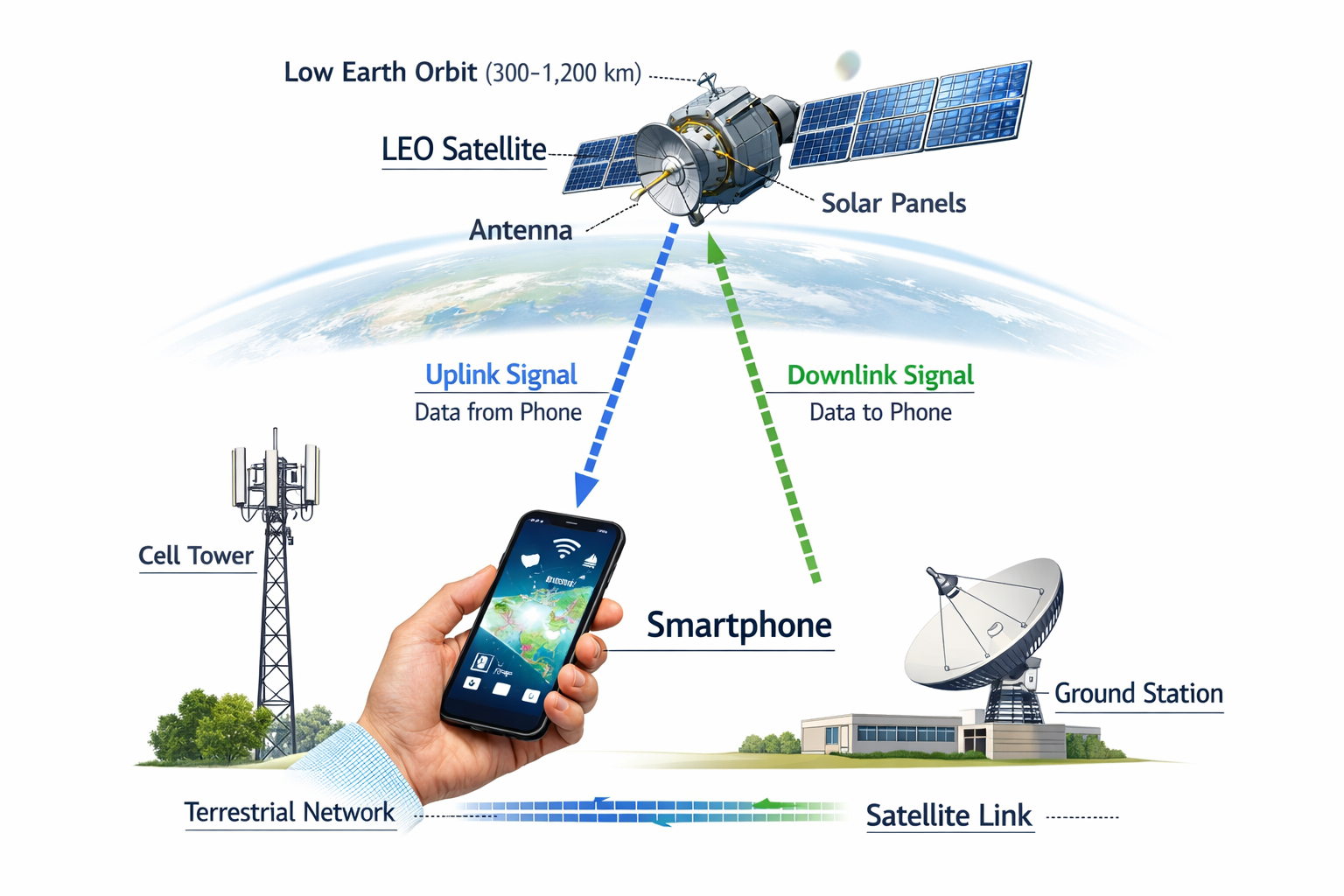
Direct‑to‑satellite smartphone connectivity refers to the ability of modern smartphones to communicate directly with satellites orbiting Earth—typically LEO satellites—without relying on traditional ground‑based infrastructure. Instead of connecting to the nearest cell tower, your phone communicates with a satellite passing overhead, which then relays your message to a ground station.
A Fundamental Shift in Wireless Communication
This capability represents one of the biggest transformations in mobile connectivity since the introduction of 3G. Traditionally, the mobile network ecosystem has been built around fixed infrastructure—towers, antennas, and fiber backbones—that require significant investment and maintenance. Remote regions, especially those with challenging geography or low population density, are often left without coverage due to the high cost of infrastructure deployment.
By bypassing cell towers entirely, direct‑to‑satellite communication breaks this dependency. A smartphone equipped with the right antennas and modem technology can connect to satellites at altitudes typically ranging from 500 to 1,200 kilometers. This dramatically increases the potential coverage area and opens the door to truly global mobile access.
Key Takeaway
Direct‑to‑satellite connectivity allows smartphones to communicate without cell towers, creating a pathway to universal coverage—even in the most remote and underserved parts of the world.
Why This Technology Matters
Billions of people around the world still lack reliable cellular coverage. Remote communities, offshore workers, long‑distance travelers, and emergency responders often operate in areas where connectivity is limited or nonexistent. Direct‑to‑satellite communication addresses this gap in ways that traditional mobile networks simply cannot.
Connectivity for Remote and Underserved Regions
Many areas have difficult terrain—mountains, deserts, dense forests—where building cell towers is impractical or economically unfeasible. Satellite networks bypass these challenges entirely, providing coverage to regions long considered unreachable.
Resilience During Natural Disasters
Hurricanes, earthquakes, and wildfires can quickly knock out cell towers and power lines. Satellite systems remain functional because they operate above the affected area. In emergency situations where every minute counts, satellite connectivity ensures that people can send messages, call for help, and receive critical information.
Global Safety and Navigation
Adventurers, sailors, pilots, and explorers stand to benefit immensely. Instead of relying on bulky satellite phones, they can use their everyday smartphones to maintain essential communication links—even across oceans or in the middle of vast wilderness.
“For the first time, our smartphones have the potential to become true global communication devices, not limited by the reach of cell towers.”
How Satellites Enable Reliable Communication
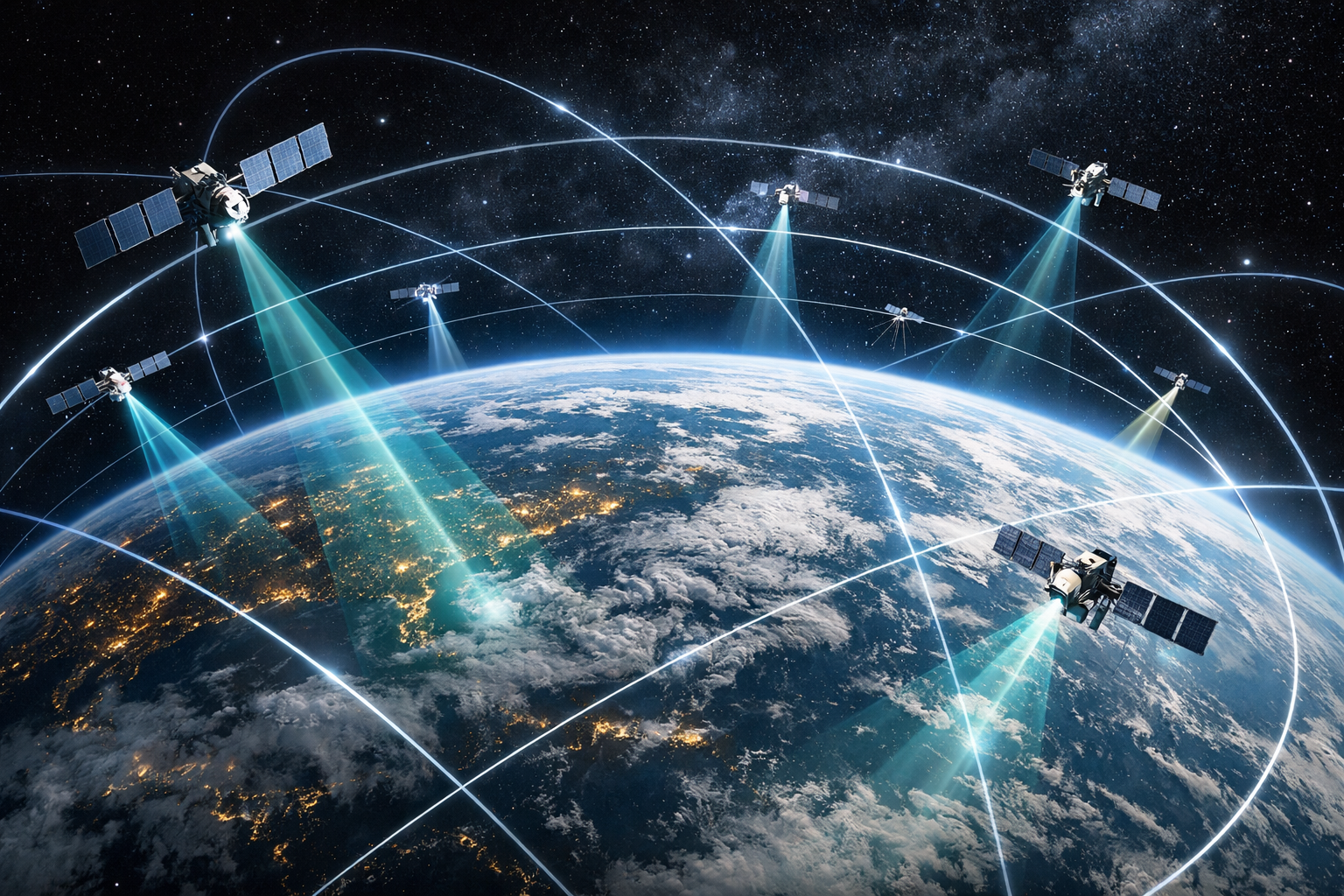
The key to direct‑to‑satellite connectivity lies in the new generation of LEO satellite constellations. Unlike traditional geostationary satellites orbiting at 35,786 kilometers above Earth, LEO satellites orbit much closer—drastically reducing latency and improving signal reliability.
The Advantages of LEO Networks
- Lower latency enables faster message transmission.
- Smaller satellites can be deployed in large constellations for broader coverage.
- Frequent satellite passes improve connection stability.
Advanced Antennas and Signal Processing
Smartphones must be equipped with specialized antennas capable of beamforming—focusing the signal toward moving satellites. New chipsets are designed to handle Doppler shifts, low‑power transmission, and dynamic tracking required for satellite links.
Spectrum Allocation
Regulatory bodies around the world are working to allocate spectrum for satellite‑to‑phone services. Cooperative agreements between satellite operators and mobile carriers are essential to ensure efficient spectrum use and minimize interference.
Real-World Applications and Early Adopters
Even in its early stages, direct‑to‑satellite connectivity is already proving its value. Several smartphone manufacturers and mobile carriers have begun rolling out limited satellite messaging services.
Emergency Messaging
Some flagship smartphones now include satellite‑enabled SOS features. Users can send short emergency messages when outside cellular coverage, providing lifesaving assistance in critical situations.
Carrier–Satellite Partnerships
Major carriers are partnering with satellite companies to expand their networks. These collaborations aim to integrate satellite connectivity directly into mobile plans, making global coverage a standard offering rather than a premium add‑on.
Use Cases in Everyday Life
- Hikers and backpackers can maintain contact in remote trails.
- Sailors benefit from reliable communication far from shore.
- International travelers experience fewer dead zones.
- Humanitarian missions can operate more efficiently in crisis zones.
Challenges and What Still Needs to Improve
Despite significant progress, direct‑to‑satellite connectivity is still evolving. Developers face several engineering and operational challenges that must be resolved before the technology becomes as seamless as traditional mobile service.
Low Data Bandwidth
Current implementations primarily support low‑bandwidth text messaging. High‑speed data or real‑time voice communication remains limited due to constraints in satellite capacity, antenna power, and connection stability.
Battery and Hardware Limitations
Connecting to satellites requires precise signal alignment and additional energy, which may impact battery life. Smartphones need optimized hardware and software to ensure efficient operation without draining resources.
The Road Toward Full Two-Way Communication
The ultimate goal is full two‑way voice and broadband data. Achieving this requires advancements in satellite density, ground infrastructure, and handset radio technology. Progress is rapid, but widespread availability of satellite‑to‑phone broadband may take several more years.
The Bottom Line
The limitations are real—but shrinking fast. Each innovation brings us closer to a future where your smartphone is always connected, regardless of location, environment, or infrastructure.
Conclusion: A Future of Universal Connectivity
Direct‑to‑satellite smartphone connectivity is one of the most transformative advancements in modern communication. By removing the dependency on terrestrial cell towers, this technology has the potential to deliver coverage to every corner of the globe. From improving safety during emergencies to connecting underserved communities, the impact is both immediate and far‑reaching.
As satellite networks expand, smartphone hardware evolves, and carrier partnerships deepen, we are approaching a future where “no signal” becomes a phrase of the past. Universal, resilient, and borderless connectivity is no longer a dream—it is rapidly becoming a reality.