








The Rise of Personal AI Operating Systems: How Individuals Will Run Their Own Digital Intelligence Layers

The Rise of Personal AI Operating Systems
A new technology shift is unfolding—one that will fundamentally redefine how humans interact with information, software, and even their own cognition. Personal AI operating systems are emerging as a new class of platforms: deeply personalized, persistent digital intelligence layers that live alongside individuals and act on their behalf. Unlike today’s chatbots or app-based assistants, these systems form a continuous cognitive thread, learning over time, adapting to context, and shaping the digital experiences around them.
In this article, we explore what personal AI operating systems are, why they’re becoming inevitable, how individuals will control them, and what this shift means for society. By the end, you’ll understand why countless researchers, technologists, and futurists believe we are entering an era where every person will run their own digital intelligence layer.
What Is a Personal AI Operating System?
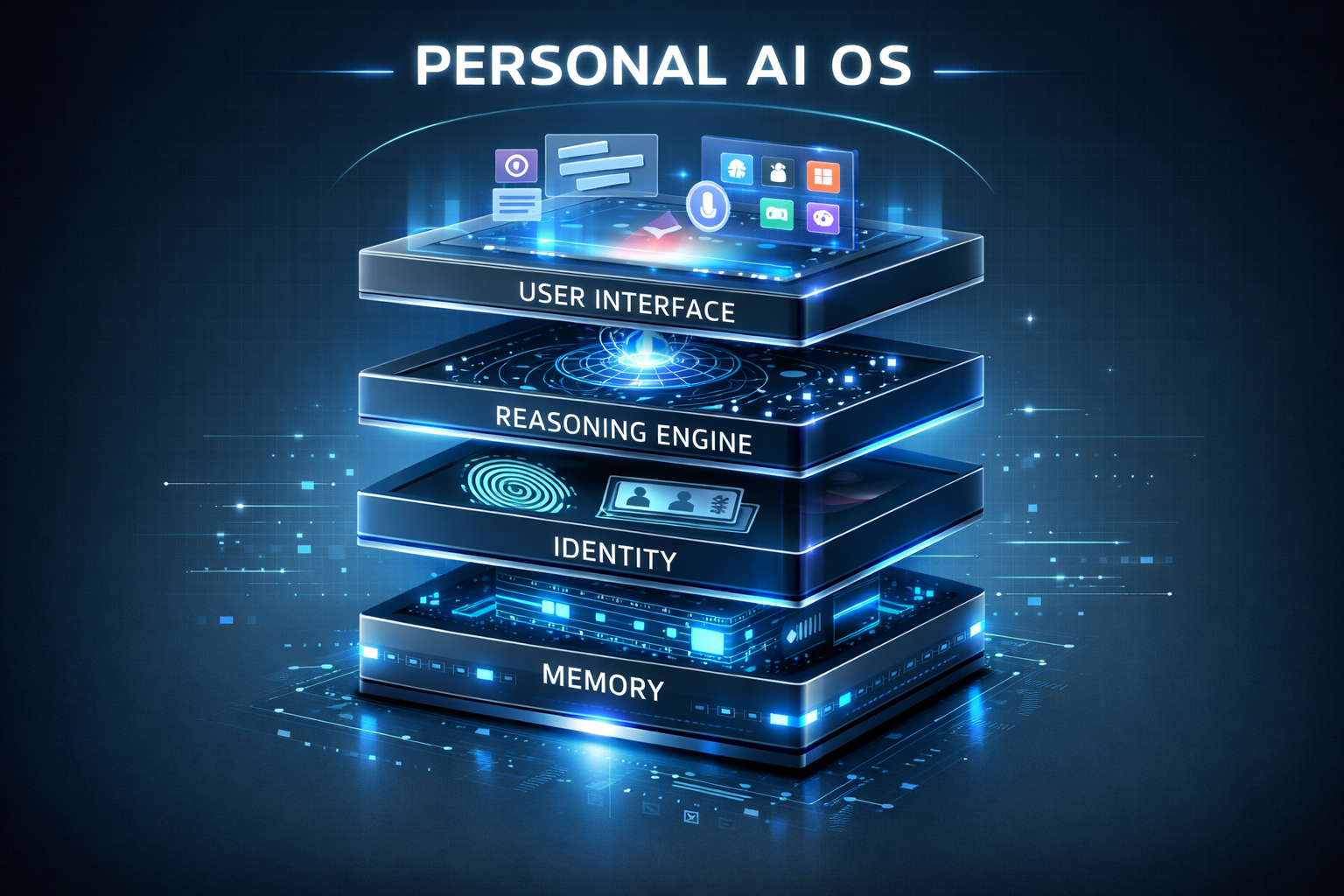
A personal AI operating system (AI OS) is a persistent, context-aware intelligence layer that manages the flow of information, decisions, and tasks for an individual. It goes far beyond the capabilities of virtual assistants like Siri, Google Assistant, or Alexa. Instead of responding to short commands or fetching quick answers, a personal AI OS becomes an active collaborator—anticipating needs, coordinating tasks, and shaping the digital world around its user.
Where today’s assistants respond to queries, a personal AI OS operates continuously, quietly optimizing hundreds of micro-decisions in the background. It serves as a digital executive function: remembering preferences, updating knowledge profiles, organizing data flows, and reasoning across your life’s complexity.
Core Components of a Personal AI OS
- Identity Layer: A persistent representation of who you are—your preferences, communication style, goals, and constraints.
- Long-Term Memory: A system that stores past interactions, projects, habits, and insights.
- Reasoning Engine: Multi-step, agentic reasoning capabilities that allow the AI to plan, explain, and improve outcomes.
- Context Awareness: Understanding your current environment, tasks, energy levels, schedule, and priorities.
- Preference Profiles: Dynamic models that reflect how you want tasks completed, how you communicate, and how decisions should be made.
“Personal AI operating systems turn static digital tools into living cognitive companions—systems that know you, grow with you, and help you navigate a world overloaded with complexity.”
The combination of these components creates something powerful: a digital counterpart that isn’t just useful but transformative. It’s an assistant that remembers everything, learns continuously, reasons about your life, and acts with your permission to improve your daily outcomes.
Why Personal AI OS Will Become Mainstream
The rise of personal AI operating systems isn’t a speculative future. It’s the natural outcome of three accelerating technology trends: the decline of app-centric workflows, the demand for seamless automation, and the growing expectation that digital experiences adapt to individuals.
As AI systems become more capable, the traditional model of opening dozens of apps, navigating interfaces, and manually organizing tasks begins to feel outdated. Users increasingly want tools that understand their intent and orchestrate the work for them.
From App-Based Workflows to AI-Orchestrated Lives
For decades, digital productivity revolved around applications. You opened a calendar app to schedule events, a notes app to jot ideas, and an email app to communicate. But in the emerging AI-first world, the user’s intent becomes the operating system’s directive:
- “Plan my week.”
- “Prepare me for tomorrow’s meetings.”
- “Help me learn Italian.”
Instead of launching multiple apps, your personal AI OS uses context, reasoning, and memory to complete the tasks autonomously. The app becomes subordinate to the intelligence, not the other way around.
AI as an Extension of Human Cognition
Perhaps the biggest driver of adoption is the simple truth that the cognitive demands of modern life far exceed the human brain’s natural limits. Individuals now juggle unprecedented volumes of information, communication, and digital tasks. A personal AI OS acts as an extension of the mind—augmenting memory, enhancing decision-making, and reducing cognitive load.
How Individuals Will Control Their Own Intelligence Layers
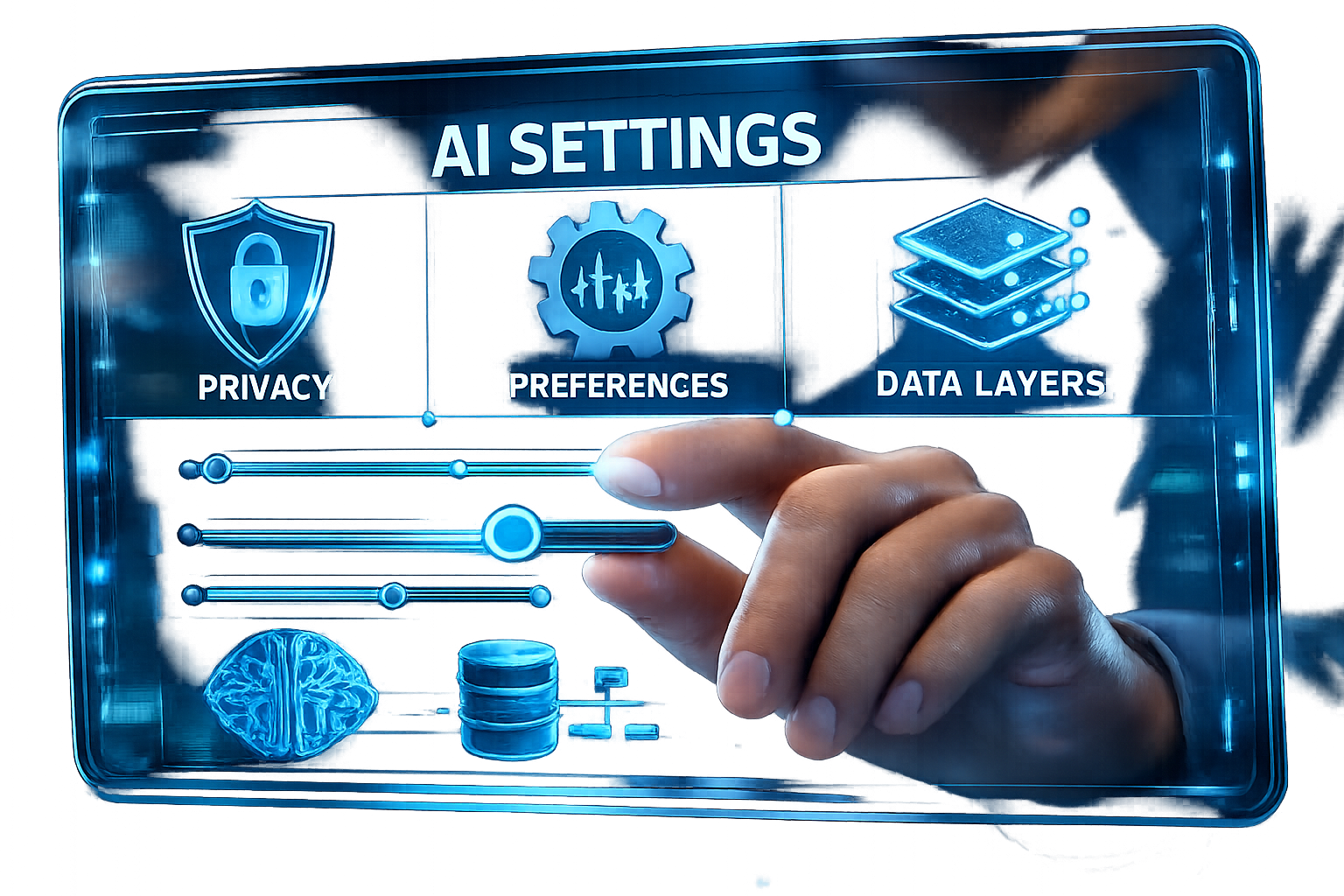
One of the most profound implications of personal AI OS is that individuals—not corporations—will increasingly own and manage their digital cognition. Instead of platforms storing scattered datasets in proprietary silos, personal AI systems centralize ownership and put the user in control.
User-Controlled Data, Preferences, and Privacy
Personal AI OS platforms will empower individuals with unprecedented control over:
- How their data is stored
- How AI models use that data
- Which tasks the AI can perform autonomously
- Which preferences, habits, and memory structures are retained or forgotten
The system becomes not just a tool but a personal asset—something configured, shaped, and governed by its user.
Continuous Personal Evolution
These systems also learn with their users. As individuals grow, acquire new skills, change careers, or shift lifestyles, their personal AI OS adapts dynamically. Over time, it forms a rich longitudinal model of the person—a far deeper understanding than any traditional software could achieve.
New Norms of Digital Autonomy
We will also see new norms around digital trust. Instead of entrusting dozens of companies with fragmented identity data, users will rely on a single, self-owned intelligence layer. This marks the transition from platform dependence to personal digital sovereignty.
Real-World Applications of Personal AI OS
The implications of personal AI operating systems extend across every domain of life. From productivity to health to education, these systems create new possibilities that would be unimaginable with traditional software alone.
Hyper-Personalized Productivity
Imagine a system that understands your energy rhythms, work patterns, and communication style. It schedules tasks at optimal times, filters unimportant notifications, prepares meeting materials, drafts communications, and organizes your digital world—without being asked.
AI-Driven Health Optimization
A personal AI OS can integrate biometrics, lifestyle data, medical records, and behavioral patterns to offer real-time insights:
- Predicting burnout
- Optimizing sleep patterns
- Adjusting nutrition plans
- Detecting early warning signs of health issues
It serves as a proactive, personalized health companion—anticipating issues long before they become problems.
Adaptive Learning and Skill Development
Your personal AI OS can track your knowledge, detect gaps, generate practice materials, and coach you through complex subjects with tailored learning strategies. Over time, the AI becomes a custom educator that evolves with your goals.
Automation Across Digital and Physical Worlds
From managing smart homes to autonomously coordinating travel, errands, finances, and digital workflows, personal AI systems become command centers for daily life. As robotics and IoT advance, the physical world becomes as programmable as the digital one.
Challenges and Ethical Considerations
With great capability comes serious responsibility. Personal AI OS platforms introduce complex ethical questions, especially around data ownership, security, and equity.
Data Sovereignty
If a personal AI OS stores your entire cognitive history—your preferences, memories, behaviors, and identity—then protecting that information becomes paramount. The future requires robust encryption, decentralized storage, and transparent governance frameworks.
Avoiding Over-Dependence
As AI systems assume more cognitive functions, society must guard against situations where individuals outsource critical thinking. Healthy boundaries between human judgment and AI assistance will become essential.
Equitable Access
Perhaps the most pressing challenge is ensuring that advanced personal intelligence systems are accessible to all—not just elite segments of society. If not addressed, personal AI could widen the cognitive and economic divide rather than close it.
Preparing for the Future of Personal AI
The shift toward personal AI operating systems is already underway. Early adopters are experimenting with agentic AI tools, memory-based assistants, and personalized reasoning engines. Over the next few years, these systems will evolve into full-fledged operating systems that orchestrate increasingly large portions of daily life.
Whether you’re an individual, a developer, or a business, now is the time to prepare—by understanding the technology, experimenting with emerging tools, and adapting workflows to an AI-first paradigm.
“The coming decade will be defined not by people using AI, but by people living alongside their own personal AI systems—trusted companions that help them think, create, and navigate the world.”
As personal AI OS technology matures, those who embrace the shift early will gain a tremendous advantage—greater clarity, higher productivity, and a more empowered relationship with the digital world.