





Are Smart Lockers the Future of Package Delivery?
Online shopping has become a normal part of everyday life. We order everything — electronics, medicine, groceries, clothing — and expect them to appear at our doorstep with near-magical speed. But as convenient as e-commerce has become, the last stage of delivery — the infamous “last mile” — is still messy, expensive, and often unreliable.
Lost packages, missed deliveries, thefts, delays, driver shortages, and rising logistics costs are all signs of a system under stress. And the more we order online, the worse the strain becomes.
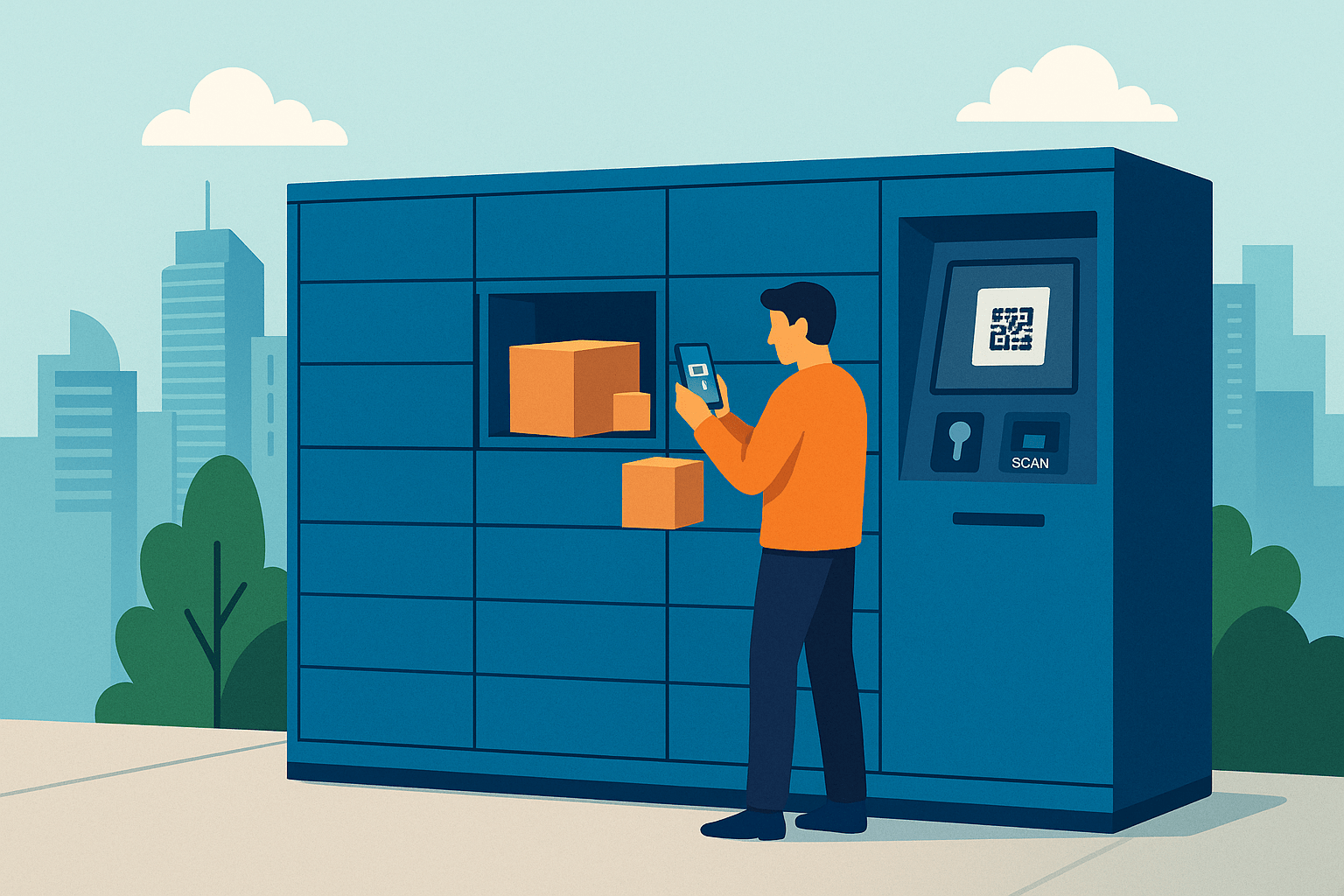
Enter smart lockers — secure, automated delivery hubs popping up in apartment buildings, supermarkets, train stations, offices, and street corners across the world. Instead of sending drivers door to door, delivery couriers drop packages into centralized, secure lockers that customers can access at their convenience.
The idea isn’t new — but the timing has never been better. With surging e-commerce, more dense cities, and the push for sustainable, cost-efficient delivery, smart lockers are being positioned as the next major evolution in logistics.
So the question is: are smart lockers truly the future of package delivery?
The Problem Smart Lockers Are Trying to Solve
The last mile of delivery is by far the most expensive stage of shipping — sometimes accounting for over 50% of total logistics costs. It’s also the most inefficient. Drivers often spend full days zigzagging through neighborhoods, ringing doorbells with nobody home, or dropping parcels in unsafe spots.
Smart lockers address several pain points at once:
1. Missed Deliveries
With lockers, couriers don’t need you to be home. They drop once, and you pick up whenever.
2. Theft and Damage
Packages in lockers are protected by PIN codes, QR scans, or app verification.
3. Inefficiency
Instead of delivering 30 packages door-by-door, a courier can offload them all at one locker station in minutes.
4. Rising Delivery Costs
Centralizing drop-offs drastically reduces time, fuel consumption, and labor costs.
5. Urban Congestion
Fewer delivery vans circulating means less traffic and less pollution — a major win for big cities.
In short, smart lockers streamline the messy parts of the delivery chain while offering a more secure, predictable experience for customers.
How Smart Lockers Actually Work
Smart lockers look simple on the outside, but inside they combine hardware, sensors, connectivity, and software.
A typical workflow:
-
The courier arrives, scans a package, and the system automatically assigns an empty compartment.
-
The correct compartment pops open.
-
After placing the package inside, the courier closes the door and the customer receives an instant notification.
-
The customer comes at any time — morning, midnight, weekend — and retrieves the package using:
-
a one-time PIN code,
-
a QR code,
-
an app,
-
or even biometric verification (in newer systems).
-
The entire interaction is fast, contactless, and secure.
Why They’re Gaining Popularity Now
Smart lockers aren’t new, but several trends have accelerated their growth:
E-commerce growth
People buy more online than ever — and their expectations for fast, reliable delivery are higher.
Urban density
Cities across Asia, Europe, and North America are becoming more crowded, making door-to-door routes inefficient.
Sustainability concerns
Reducing delivery van traffic, fuel consumption, and carbon emissions is a priority for many governments and logistics companies.
Labor shortages
Logistics companies face pressure from rising labor costs and shortages of drivers. Lockers reduce workload dramatically.
Safer and contactless delivery
The pandemic shifted consumer preferences toward low-contact solutions — lockers became the perfect alternative.
Apartment managers prefer them
Property managers are tired of packages cluttering lobbies, being stolen, or requiring staff time. Lockers solve all of that with zero staff involvement.
All of these forces make lockers not just convenient, but necessary.
Where Smart Lockers Are Thriving Today
Smart lockers are becoming especially dominant in regions shaping the future of logistics.
Urban Asia
Cities like Tokyo, Seoul, Shanghai, Bangkok, and Singapore already face extreme density. Smart lockers help reduce delivery congestion and fit neatly into transit stations, malls, and residential complexes.
Europe
Parcel lockers are widely used in Poland, Germany, the UK, and the Nordics. In some countries, people prefer lockers over home delivery entirely.
North America
Locker networks from Amazon, UPS, and independent providers are expanding across apartment buildings, campuses, and convenience stores.
Developing Regions
Areas with unreliable addresses or limited home security benefit greatly from centralized, safe locker pickup.
Advantages That Make Lockers Hard to Ignore
Smart lockers come with a compelling list of benefits:
✔ Convenience
Pick up packages at any time — no waiting, no missed deliveries.
✔ Security
Cameras, digital locks, and unique access codes drastically reduce theft and loss.
✔ Faster couriers
Drivers finish their routes faster, meaning cheaper and more reliable delivery.
✔ Lower carbon footprint
Fewer road miles, fewer van stops, and fewer deliveries per package.
✔ Building efficiency
Apartment staff no longer manage dozens of daily parcels — everything stays organized.
✔ Perfect for high-volume cities
Dense environments amplify their efficiency.
For large apartment buildings and offices, lockers shift logistics from chaos to order.
The Limitations People Don’t Talk About
Smart lockers are not a perfect universal solution — and understanding their limitations is crucial.
Size constraints
Big items like large appliances or bulky boxes won’t fit.
Accessibility issues
If lockers are placed far away or in inconvenient locations, adoption suffers.
Upfront cost
Installing lockers — especially climate-controlled versions — requires investment.
Network fragmentation
Too many competing locker systems could confuse users (“Which locker did my package go to?”).
Not ideal for rural areas
Low population density makes lockers less efficient outside of cities.
Still, these challenges aren’t deal-breakers — they’re simply reminders that lockers must complement, not replace, home delivery.
The Future: Lockers + Autonomous Delivery + Micro-Hubs
Smart lockers won’t exist in isolation. They are increasingly part of a larger, connected delivery ecosystem.
Here’s what the next phase may look like:
Autonomous delivery robots dropping into lockers
Robots could transport packages to local lockers without human drivers.
Drone delivery paired with rooftop locker stations
Drones deposit packages into rooftop or balcony lockers in dense cities.
Locker micro-hubs replacing small courier depots
A single locker hub can serve an entire neighborhood.
AI predicting locker inventory and automating routing
Algorithms will determine the most efficient drop-off point for every package.
Temperature-controlled lockers for groceries and medicine
Already emerging in some cities — fresh food and insulin delivered securely.
Personal lockers in residential buildings
Future apartments may have built-in locker walls, much like mailboxes today.
Smart lockers are evolving from a convenience to an infrastructure standard — like modern mail.
So… Are Smart Lockers the Future?
The answer is yes — but not alone.
Smart lockers won’t replace home delivery entirely. Some shipments will always require doorstep service. Rural regions won’t adopt lockers at the same rate as big cities. And certain deliveries will need human handling.
But in large cities — where most online orders originate and where delivery inefficiencies are most painful — smart lockers are poised to become a backbone of the logistics network.
They are secure, scalable, eco-friendly, and dramatically more efficient for couriers.
And for customers, they eliminate the headaches of missed deliveries and stolen packages.
In other words:
Smart lockers won’t be the only future of delivery — but they will be a major part of it.
A future where picking up a package feels as natural as checking a mailbox.