




Ambient Computing: The Future Where Tech Works Without You Asking

Technology used to be something we actively used. You opened your laptop to get work done. You pulled out your phone to check something. You spoke to a smart assistant and hoped it understood you. Every interaction required intent — a conscious decision to “use tech.”
But the future is heading somewhere different.
A world where technology quietly exists in the background.
A world where devices don’t just respond — they anticipate.
A world where computing becomes… ambient.
Ambient computing is the idea that technology blends seamlessly into everyday life, always present, always aware, and always ready to help — without you having to stop, tap, type, or even ask.
And believe it or not, we are already stepping into that future.
So, What Is Ambient Computing, Really?
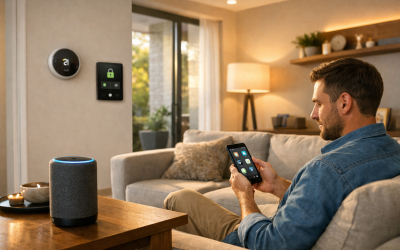
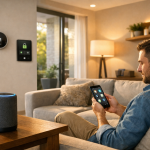
Imagine walking into your home and the lights automatically adjust to the time of day, your music resumes right where you last left off, your thermostat balances comfort and energy efficiency, and your calendar gently reminds you of what’s next — without you doing anything.
No commands. No apps.
Just intelligent systems working quietly around you.
Ambient computing is powered by three big things:
-
Sensors that detect context (movement, light, temperature, presence)
-
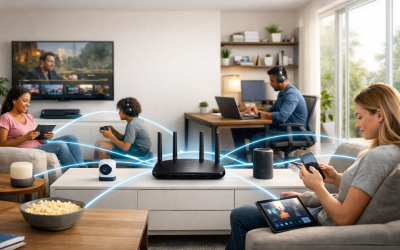
Connectivity that links devices together
-
Artificial Intelligence that understands patterns and makes decisions
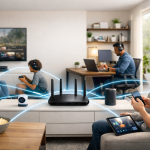
Instead of interacting with a single device, you live inside a network of awareness — your home, your car, your workplace, your devices all connected, learning, adapting, and helping.
We’re Already Experiencing the First Wave
If ambient computing sounds futuristic, think again. You’ve probably already experienced early pieces of it.
Smart speakers that respond without buttons.
Phones that unlock when they recognize your face.
Cars that detect fatigue.
Smart thermostats that “learn” your habits.
Wearables that track health without effort.
Apps that suggest exactly what you need before you search.
None of these require constant commands anymore.
The tech is watching patterns and quietly responding.
Even our workplaces are transforming. Offices now have:
-
Meeting rooms that automatically join calls
-
Motion-based lighting
-
Systems that adjust temperature and ventilation
-
AI that summarizes discussions without being told
The future is not sci-fi. It’s just becoming more invisible.
Why Ambient Computing Matters
For most people, the biggest benefit is reduced friction. We spend an enormous amount of time managing technology — checking, tapping, configuring, logging in, navigating menus.
Ambient computing replaces that manual engagement with effortless interaction.
It creates:
-
Convenience — less tech juggling
-
Personalization — experiences tailored to you
-
Accessibility — better support for elderly and disabled users
-
Efficiency — reduced energy and resource waste
-
Calm — fewer interruptions and choices to make
Technology becomes something that helps, not something that constantly demands attention.
Where This Is Heading Next
The future of ambient computing goes far beyond smart homes.
In Everyday Life
Your city infrastructure could become responsive, with lighting, traffic, and services adjusting dynamically. Retail environments could personalize experiences automatically when you walk in. Healthcare monitoring could happen continuously and quietly, detecting issues early without stressful check-ups.
In Work
Imagine offices that adapt to who is in them, workflows that organize themselves, and digital systems that anticipate what you need before the request is even formed.
In Mobility
Cars that seamlessly coordinate with roads, homes, and workplaces. Vehicles that aren’t just smart — but are part of a living digital ecosystem around you.
Ambient computing creates a world where environments become intelligent — not just devices.
But There’s a Big Question: How Do We Stay in Control?
With great convenience comes necessary caution.
For ambient computing to work, systems need data.
Lots of data.
That means:
-
Location awareness
-
Behavior tracking
-
Emotional and health analysis
-
Environmental sensing
This raises questions around privacy, security, consent, and transparency.
Who controls this data?
Who gets to see it?
What happens when systems are wrong?
How do we prevent misuse?
The future depends on designing ambient technology that respects human boundaries while still being helpful.
The goal shouldn’t be “machines running everything.”
The goal should be technology that feels like a trusted assistant — not a silent supervisor.
The Future Feels… Calm
The biggest shift ambient computing promises isn’t louder innovation. It’s quieter life.
Technology fades into the background.
Interaction becomes natural.
The world feels more responsive, more aware, more intuitive.
We stop “using tech” and simply live — and technology supports us in doing it better.
That’s the real vision:
A future where computing becomes so seamlessly integrated into our surroundings that we barely notice it… yet we benefit from it constantly.
The best technology is the kind that feels invisible. And that future isn’t far away anymore.