







DIY Smart Home Setup on a Budget: The 2026 Guide
Smart homes used to be something you saw in futuristic concept videos — sleek spaces where lights adjusted themselves and appliances responded to your voice. Today, that future has quietly arrived, and you don’t need a designer budget to bring it into your own home.
Thanks to cheaper devices, universal standards like Matter, and the huge number of brands targeting affordable segments, building a smart home in 2026 is something anyone can do. The real challenge isn’t money — it’s knowing where to begin.
This guide walks you through building a practical, modern smart home without overspending, focusing on simple upgrades, meaningful comfort, and solutions that make your everyday routine genuinely easier.
Start With What Actually Matters to You
Before buying anything, it helps to step back and think about what you want your “smart home” to actually do. Most people don’t need a complicated system of interconnected gadgets. They want small conveniences: a home that welcomes them with warm lighting, appliances that switch off reliably, a bit more security, or simply less hassle flipping switches.
A good approach is to start with one or two scenarios from your daily life.
Maybe you want:
-
softer lighting when winding down,
-
a cooler room waiting for you when you get home,
-
a reminder if you forgot to close the balcony door,
-
or the ability to check on your living room while you’re away.
Thinking in terms of real moments makes your setup both cheaper and more practical. Instead of buying random gadgets, you build a home that adapts to the way you live.
Choosing an Ecosystem Without Getting Locked In
One of the biggest improvements in recent years is the rise of Matter, a universal standard that allows devices to work across ecosystems. That means choosing “Google Home vs. Alexa vs. Apple Home” is no longer as restrictive as it once was.
A simple rule is to start with whichever ecosystem fits your current lifestyle:
-
If your phone is Android, Google Home will feel the most natural.
-
If you live in Apple’s world, HomeKit gives you effortless automation and strong privacy.
-
If you like voice control and budget-friendly accessories, Alexa is still the king of compatibility.
Because Matter lets everything talk to each other, you’re free to mix brands later without worrying about breaking your setup. It also means you don’t need to buy a hub on day one — most devices simply connect to Wi-Fi or Thread and integrate instantly.
Lighting: The Most Transformative Upgrade for the Least Money
If there’s one place to begin, lighting is almost always it. Smart bulbs and switches offer the biggest “wow” moment for the lowest cost, and they immediately make your home feel more modern.
For renters, replacing a few regular bulbs with smart LEDs gives you color options, brightness control, and the ability to schedule scenes throughout the day. For homeowners, smart switches can upgrade entire rooms without swapping out every bulb.
What makes lighting powerful is how subtle the impact is. Morning light can ease you awake instead of blasting you with brightness. A warm dim glow in the evening makes your home feel instantly calmer. Motion-activated hallway lights quietly improve safety and convenience without you ever thinking about them.
A few well-placed smart bulbs and an LED strip behind a TV or desk can make even a basic apartment feel premium.
Security That Feels Simple, Not Expensive
You don’t need an elaborate system to make your home feel more secure. A couple of cleverly placed sensors can already offer peace of mind and useful automations.
Door and window sensors, for example, are inexpensive and tiny — yet incredibly practical. They can tell you if someone opens the door, switch off your AC if a window is left open, or trigger lights automatically when you arrive home.
Indoor cameras have also become much more affordable and privacy-friendly. Many models now support local storage, meaning you don’t have to pay subscriptions just to view your own footage. If you prefer not to have cameras indoors, a smart doorbell is a great alternative for monitoring visitors and deliveries.
The goal isn’t to surround yourself with surveillance. It’s to add small, reassuring touches that make the home feel protected without complicating your life.
Saving Energy Without Thinking About It
One of the most underrated benefits of smart-home tech is energy savings. Small automations can prevent wasted electricity and help keep your monthly bills more predictable — especially if you use AC often.
Smart plugs, for instance, let you control almost any device: fans, lamps, coffee makers, routers, purifiers, you name it. With simple schedules, you can ensure that things switch off at night or when you’re away.
If you want to take it a step further, smart AC controllers can turn old air conditioners into intelligent ones. They learn your routines, avoid cooling empty rooms, and often pay for themselves within months if you live in a warm climate.
The beauty of these upgrades is that they work quietly in the background. You set them once, forget them, and enjoy the savings.
Voice Assistants: Not Essential, But Surprisingly Helpful
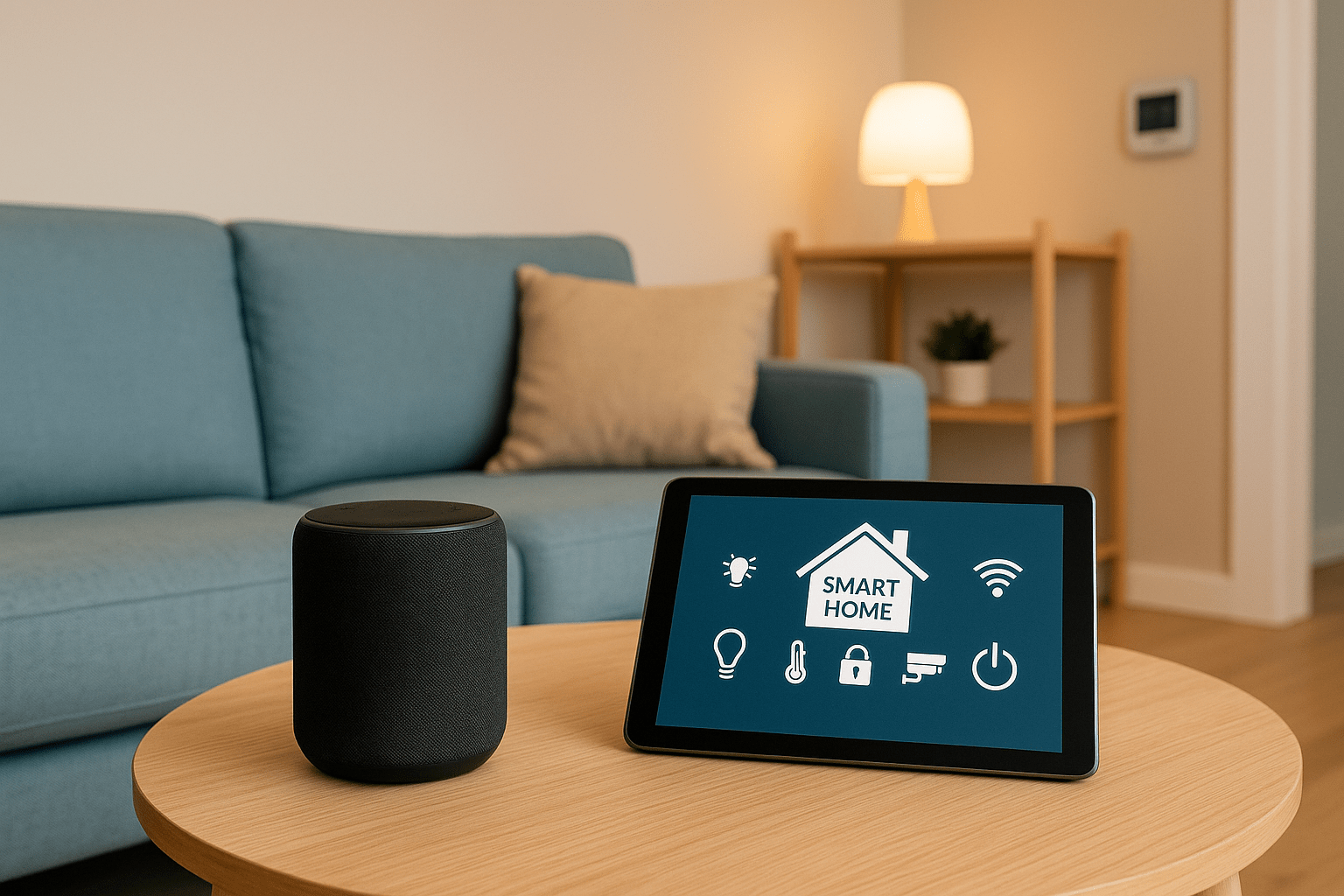
You don’t need a smart speaker to build a smart home — but adding one makes everything feel more fluid. Being able to say “Good night” and have the lights dim, the AC adjust, and your doors lock feels effortless.
Entry-level speakers are extremely affordable now, and even a single small device in the living room can be enough to control your entire home with your voice. If you dislike talking to gadgets, buttons and app controls still do the job just fine, though voice commands often speed things up.
Automations That Bring Everything Together
A smart home isn’t about gadgets. It’s about routines — those little workflows that make your home respond intelligently to your lifestyle.
Here are a few examples that work beautifully without feeling gimmicky:
-
Your hallway lights turn on softly when you come home at night.
-
The living room lights dim automatically when you start a movie.
-
The air purifier increases speed when cooking triggers the kitchen sensor.
-
Bedroom lights warm up gradually in the morning.
-
All plugs and lights shut down when you leave the house.
-
A sensor turns the fan on only when humidity rises.
The best smart homes don’t overwhelm you with complexity. Instead, they remove friction from everyday moments you didn’t realize could be improved.
Growing Your Setup at Your Own Pace
Once you get the basics running, it’s easy to expand gradually. Maybe you’ll add a motion sensor to improve hallway lighting. Maybe you’ll experiment with smart buttons that let you trigger scenes with a tap. Or if you enjoy tinkering, you might explore powerful local-control systems like Home Assistant, giving you deeper customization without monthly fees.
The key is that a smart home doesn’t have to be built all at once. It evolves naturally, room by room, routine by routine.
A Budget-Friendly Starter Setup That Still Feels Premium
To give you a sense of scale, a solid beginner setup doesn’t need a big investment. A few bulbs, a couple of sensors, and a smart plug or two is enough to transform the feel of your home.
From there, you can add more as your needs grow. The point isn’t to create a futuristic showcase — it’s to build a home that quietly works for you.
Final Thoughts: A Smarter Home Doesn’t Have to Be a Flashy One
A budget smart home in 2026 isn’t about showing off gadgets or chasing trends. It’s about small comforts, seamless routines, and removing little points of friction from your everyday life.
The most impressive smart homes aren’t those filled with devices — they’re the ones that feel calm, effortless, and intuitive.
Build slowly. Keep it practical. And let your home become a place that adapts to you, not the other way around.