

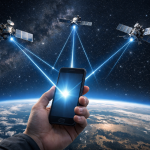
How Ultra-Wideband (UWB) Technology Is Transforming Indoor Navigation and Smart Device Interactions
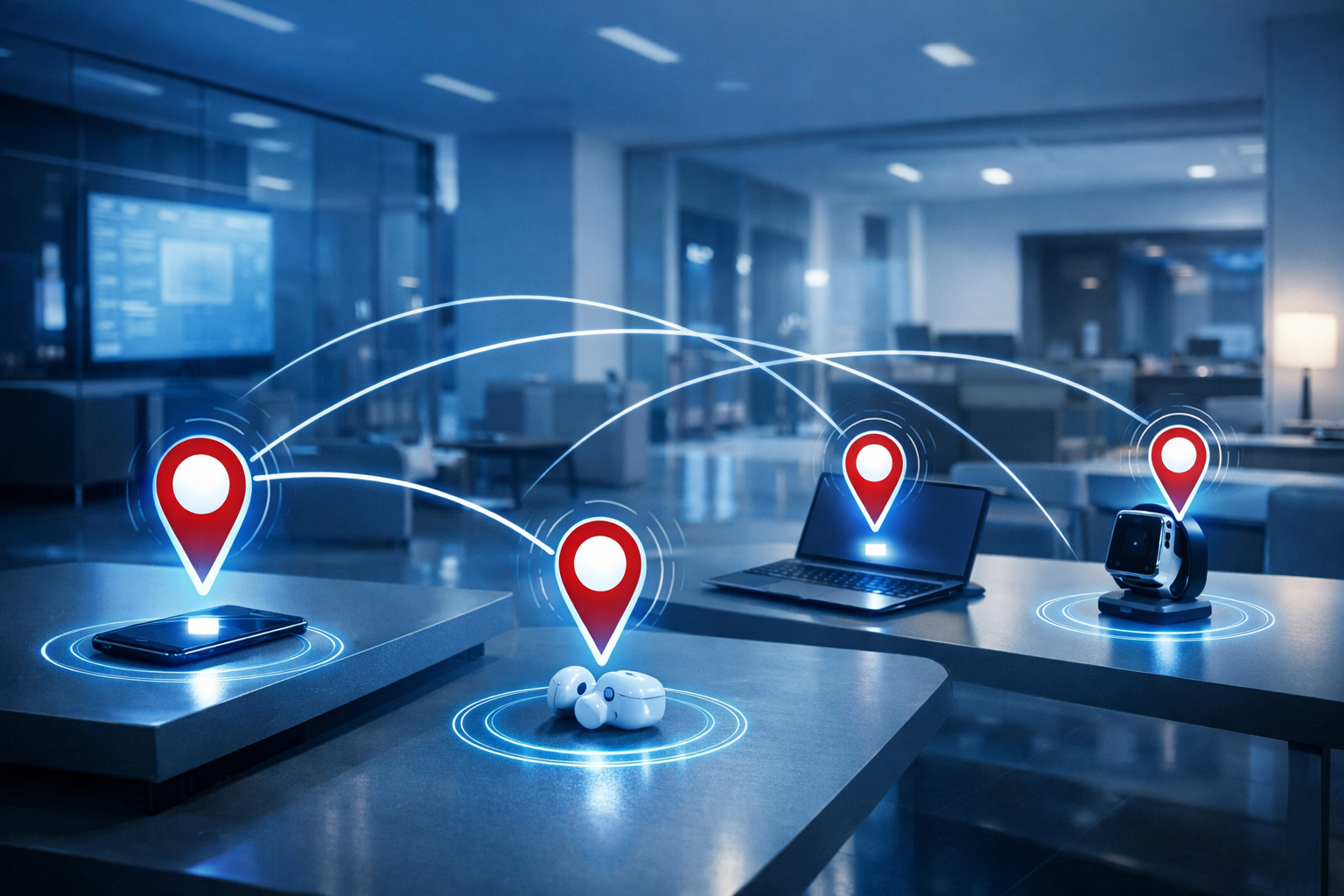
How UWB Technology Is Enabling Precise Indoor Navigation and Smarter Device Interactions
Ultra-Wideband (UWB) technology has quietly become one of the most transformative wireless innovations of the decade. Once reserved for industrial applications and niche research fields, UWB is now embedded in smartphones, vehicles, smart home devices, and enterprise systems. Its ability to deliver centimeter-level accuracy makes it a breakthrough for indoor navigation, spatial computing, secure device interactions, and real-time automation.
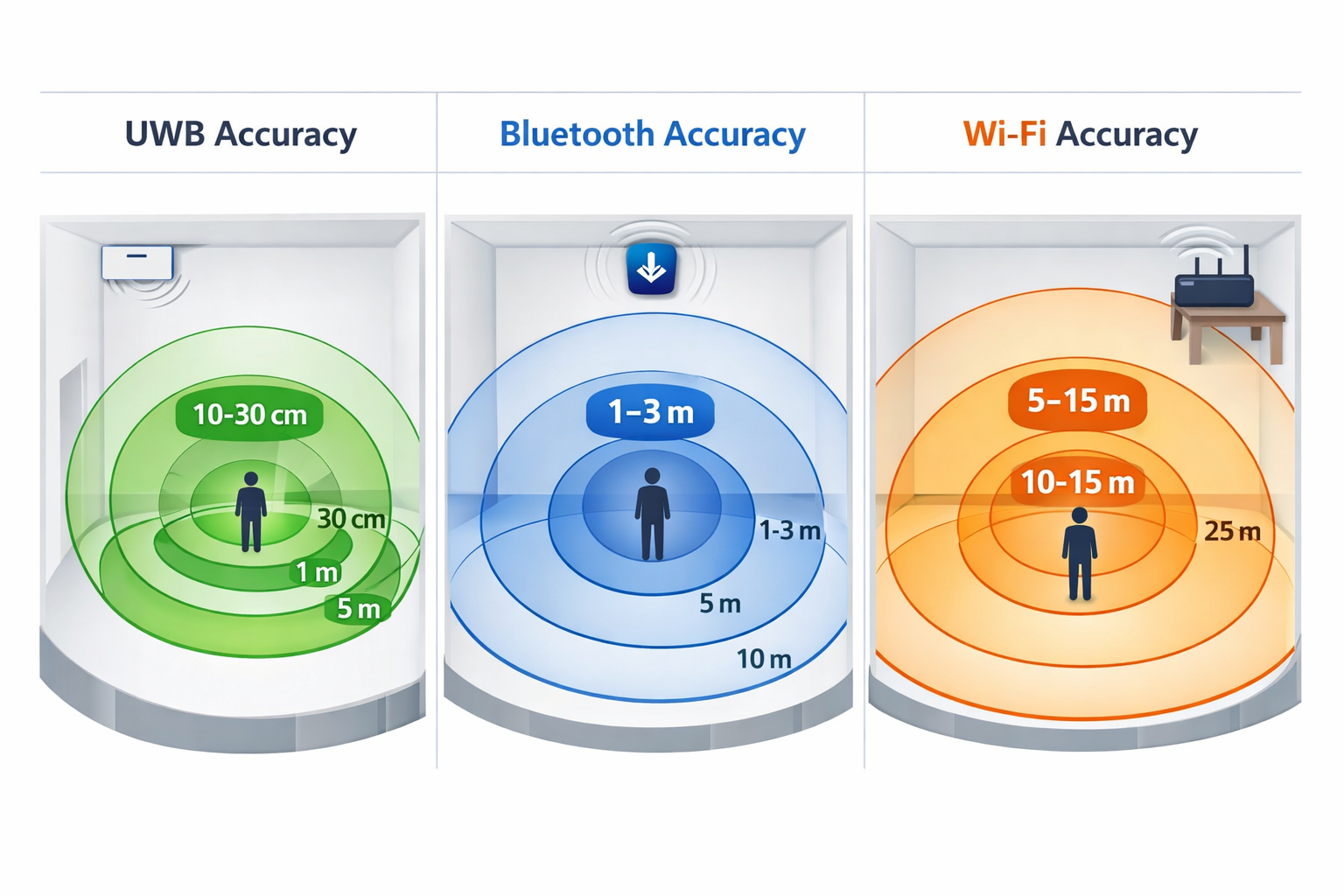
While technologies like Bluetooth, Wi-Fi, and GPS each solve different problems within the wireless ecosystem, none of them can match UWB’s precision or reliability in complex indoor environments. As more companies adopt UWB for tracking, automation, and user experience design, its impact on both consumer and industrial technology continues to grow at an accelerated pace.
What Makes Ultra-Wideband Different?
Unlike traditional wireless communication methods that rely on continuous radio waves, Ultra-Wideband uses extremely short, high-frequency pulses. These pulses are able to measure distance between devices with exceptional precision, making UWB ideal for applications that require exact location tracking and secure, directional communication.
Several characteristics differentiate UWB from other location-based technologies:
- UWB uses short, high-frequency pulses to determine precise device distances and locations.
- It offers centimeter-level accuracy, far surpassing Bluetooth and Wi-Fi.
- Low interference and high security make it ideal for demanding indoor environments.
UWB’s precision stems from its ability to measure Time of Flight (ToF) and Angle of Arrival (AoA) with remarkable accuracy, giving it unmatched reliability for indoor positioning.
How UWB Enables Precise Indoor Navigation
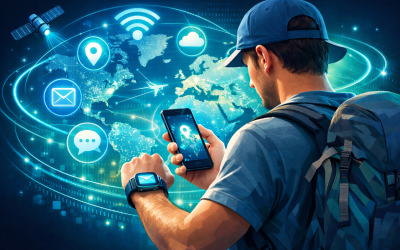
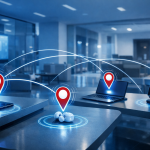
Indoor navigation has historically been a difficult technological challenge. GPS signals degrade indoors, and Bluetooth-based systems often struggle with interference and variable accuracy. UWB offers a fundamentally different approach, enabling real-time, reliable tracking across complex environments such as airports, warehouses, hospitals, and shopping centers.
Common use cases that are quickly becoming industry standards include:
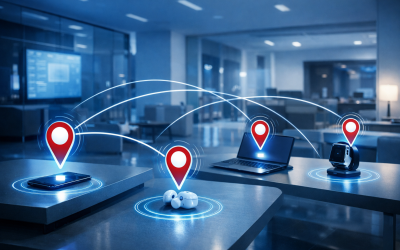
- UWB beacons allow devices to continuously track position in real time.
- Industries like logistics, retail, healthcare, and transportation rely heavily on precise indoor tracking.
- Supports asset tracking, autonomous robots, and real-time wayfinding applications.
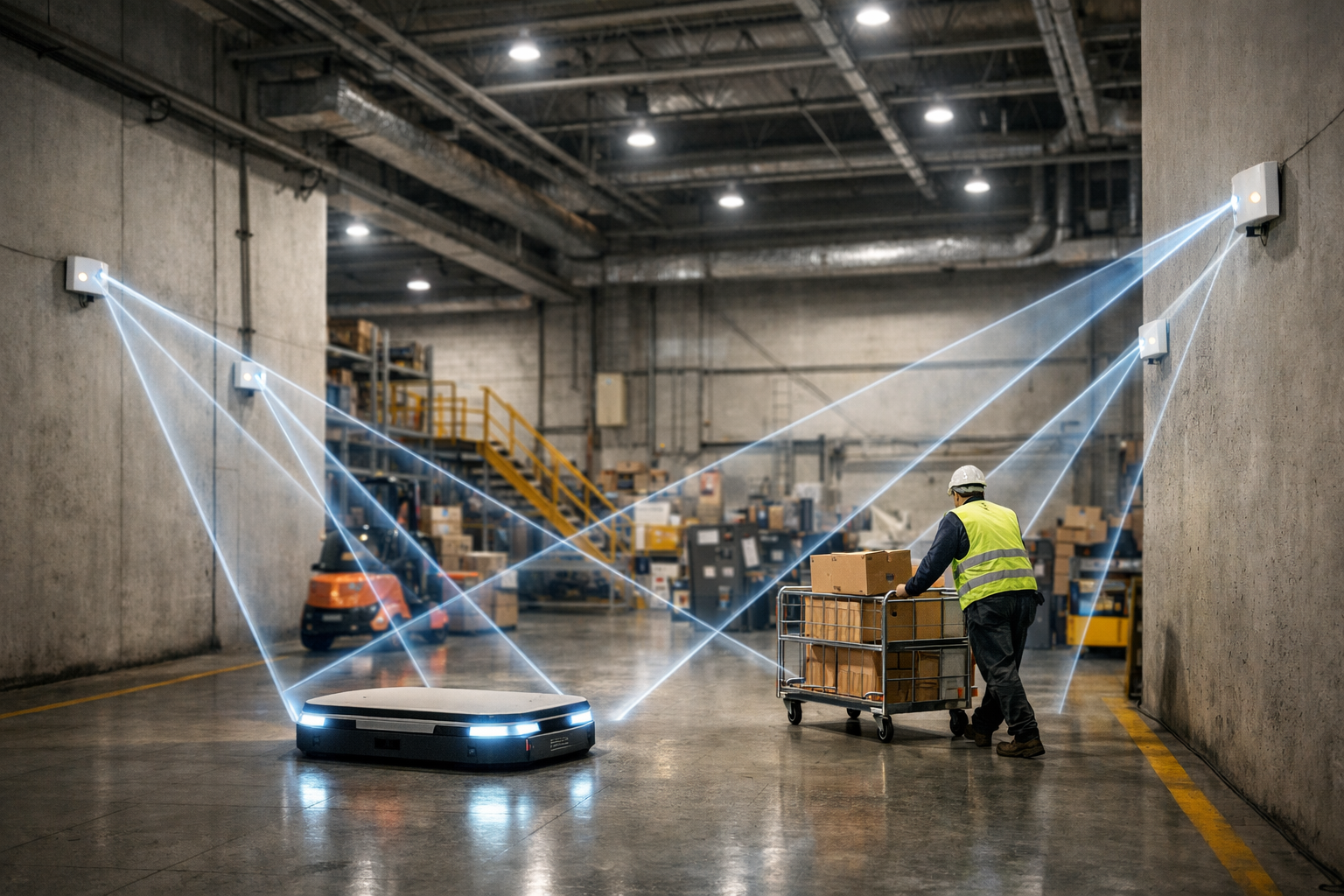
UWB’s precision and speed enable indoor navigation systems that function with the fidelity of GPS—something that businesses have sought for decades.
Smarter Device Interactions with UWB
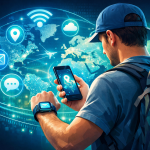
Beyond navigation, UWB is driving a new era of intelligent device-to-device interactions. Because UWB can identify not just how close another device is but also its exact direction, it enables richer, more intuitive user experiences that were previously impossible.
Some of the most promising interaction capabilities include:
- UWB enables secure, directional communication between devices.
- It supports advanced interactions like spatial awareness and proximity-triggered features.
- Widely used in smartphones, smart locks, automotive access systems, and emerging IoT devices.
For the first time, consumer devices can understand spatial context—opening doors only when the correct person approaches, handing off tasks automatically, or responding to precise gestures.
Real-World Use Cases Already Transforming Industries
UWB is not just a future technology; it is already embedded in leading products and enterprise systems. Major industries have adopted UWB for improved efficiency, safety, and user convenience.
- Automotive hands-free entry and personalized in-car settings.
- Smart home automation triggered by precise user location.
- Retail analytics and customer flow mapping for improved experiences.
- Healthcare tracking for equipment, staff, and patient safety.
As more devices integrate UWB chips, cross-device communication will evolve into a seamless ecosystem where spatial intelligence becomes a standard feature.
Conclusion: The Future of UWB Is Spatially Intelligent
UWB’s rise signals a fundamental shift in how devices interpret and interact with the physical world. Its combination of accuracy, security, and low interference positions it as a cornerstone of next-generation indoor navigation systems and spatially aware devices. Whether guiding hospital equipment, enabling frictionless retail experiences, powering autonomous robots, or personalizing home environments, UWB is shaping a future where technology responds with precise awareness of its surroundings.
As spatial computing, IoT ecosystems, and smart automation continue to expand, UWB will play an increasingly central role in creating environments that are responsive, adaptive, and deeply intuitive.
Explore the Future of UWB Technology
Stay informed about advances in precise positioning and the next wave of smart device innovations. The more you understand UWB, the better prepared you’ll be for the next generation of spatially aware technology.