







How to Secure Your Digital Identity in 2025

In 2025, the idea of who you are online has become just as important as who you are offline. Our digital identities—woven from email accounts, bank logins, shopping profiles, social media posts, and even the way we type—are now central to daily life. They open doors to opportunity, but also to risk.
The question is no longer whether someone might try to steal your data. It’s whether you are ready when they do.
What Digital Identity Really Means
Digital identity isn’t just your password or your government-issued ID. It’s a patchwork of details: your personal information, your financial records, your browsing history, and increasingly, your biometrics. Together, these fragments form a profile that defines you in the eyes of companies, institutions, and unfortunately, hackers.
Losing control of that identity isn’t just inconvenient—it can reshape your life. Imagine a fake loan taken in your name, or a deepfake video that convinces your colleagues you said something you never did. These are not science fiction scenarios anymore; they are happening every day.
The New Threats of 2025
Cybercriminals today don’t rely on clumsy scams filled with typos. They use artificial intelligence to craft perfect phishing messages, clone your voice, or even create a convincing video of you saying things you never said. Password leaks, which once seemed catastrophic, have become almost routine. And while biometrics like fingerprints and face scans once felt secure, they are increasingly being spoofed with advanced tools.
The result? Even cautious people can fall prey. What’s needed now is not paranoia but preparation.
Building Stronger Defenses
So how do you stay safe? The good news is that the tools available to protect your digital identity are better than ever—if you use them wisely.
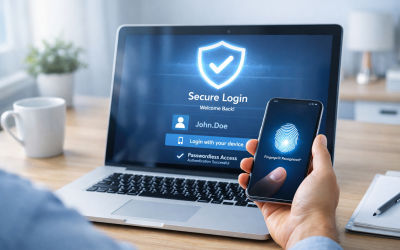
Passwords are still with us, but they’re being replaced by passkeys, which rely on cryptographic keys stored on your device. Unlike a password, a passkey can’t be guessed or stolen with a phishing email. Where passkeys aren’t yet supported, a password manager remains your best friend, helping you create unique, complex logins without trying to memorize them.
Just as important is multi-factor authentication. Adding a second step—like a security app, hardware key, or biometric scan—makes breaking into your accounts far harder. SMS codes still exist, but in 2025 they’re considered the weakest form of protection.
Beyond logins, it’s about awareness. Keep an eye on your digital footprint with breach-monitoring services. Pay attention to unusual requests, especially if they seem urgent or emotional—hallmarks of AI-driven scams. And treat your devices as the front doors to your digital life: update them regularly, encrypt them, and separate your smart home gadgets from the networks where you handle sensitive information.
Rethinking Everyday Habits
Securing your identity isn’t only about tools—it’s also about behavior. Consider how much of yourself you give away for free. A birthday post on Instagram, a location check-in at your favorite café, or even a casual answer to an online quiz adds to the data pool attackers can exploit.
Being cautious doesn’t mean being invisible. It means being intentional. Before sharing, ask: Does this piece of information make it easier for someone to impersonate me?
In the same spirit, think about your family. Children and elderly relatives are frequent targets of scams. Teaching them digital hygiene—how to spot a suspicious message, why not to click unknown links—is just as important as locking your own accounts.
New Tools on the Horizon
2025 isn’t only about threats; it’s also about innovation in defense. Decentralized identity systems, built on blockchain, are beginning to give individuals more control over their credentials. Instead of relying on companies that might leak your data, you hold your digital keys and choose exactly what to share.
Meanwhile, security apps are getting smarter, using AI to spot unusual behavior in your accounts—like a login attempt at an odd hour or from a location you’ve never visited. Browsers and search engines designed around privacy are gaining traction, helping to reduce your online trail. And personal “data vaults” are emerging, giving you a single secure place to manage and share sensitive information when absolutely necessary.
Practicing Digital Hygiene
Think of digital security like personal health. Brushing your teeth doesn’t guarantee you’ll never need a dentist, but without it, problems are inevitable. The same goes for digital hygiene. Small habits—like reviewing app permissions, logging out of devices you no longer use, or backing up important files—make you more resilient when trouble strikes.
And just as public health depends on community behavior, digital safety benefits from shared awareness. Talking about scams with friends, warning your parents about new phishing techniques, or showing your children how to use privacy settings can make the whole household safer.
Looking Ahead
As governments push toward universal digital ID systems and companies tie more services to biometric authentication, the importance of protecting your digital self will only grow. Convenience will keep tempting us to hand over more of our information, but with each new layer of convenience comes new responsibility.
The future of digital identity isn’t about retreating from technology; it’s about using it on your own terms. That means combining modern tools like passkeys and decentralized IDs with a mindset of healthy skepticism and everyday caution.
As one cybersecurity researcher put it recently: “In 2025, your digital identity is your passport, your bank account, and your reputation rolled into one. Treat it with the same care you treat your life offline.”
Final Thoughts
Securing your digital identity in 2025 doesn’t require being an expert hacker or living in fear. It requires balance—between embracing new technologies and questioning them, between enjoying the ease of digital life and recognizing its risks.
Think of it as a lifelong practice. The same way you lock your home at night without hesitation, get into the habit of locking down your digital world. Update your devices. Use strong authentication. Share less than you think you should. And most importantly, stay curious about how technology is changing—because the threats will evolve, but so will the defenses.
Your digital identity is one of your most valuable assets. Guard it, nurture it, and make sure it always represents you—and not someone pretending to be you.