









Meet the Woman Leading AI Education Initiatives in Schools
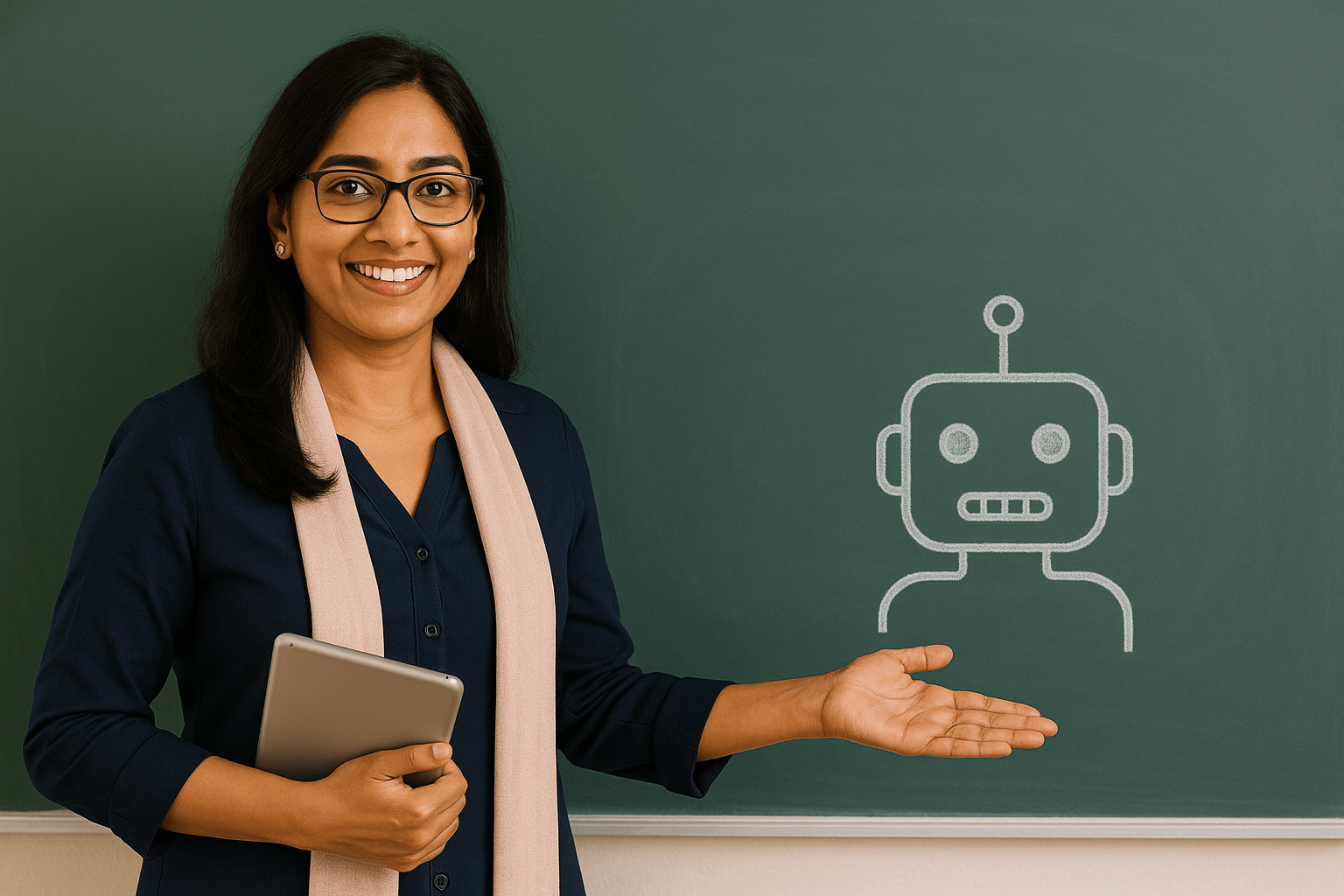
Artificial Intelligence is no longer just a buzzword thrown around in boardrooms and tech conferences. It has begun reshaping the way we work, live, and—most importantly—learn. Around the world, educators are grappling with how to introduce AI responsibly in classrooms while ensuring students are not just passive consumers of technology but active participants in shaping its future. At the center of this movement is an inspiring educator and technologist, Dr. Ananya Rao, who is spearheading AI education initiatives in schools across India.
Her mission is bold yet simple: make AI accessible to every child, regardless of where they live or what resources they have.
A Teacher at Heart
Dr. Rao’s story doesn’t begin in Silicon Valley but in a modest classroom in Bengaluru, where she first worked as a schoolteacher after completing her degree in computer science. She recalls standing in front of curious students, many of whom had never touched a computer, and realizing that technology could either be a great equalizer—or another barrier.
“Education should empower,” she says. “But if technology is accessible only to a few, it deepens inequality. I wanted to change that.”
This realization shaped her career path. Instead of pursuing high-paying corporate roles, she continued to explore how digital tools could transform learning outcomes. Over the years, her curiosity about emerging technologies led her into AI research, where she discovered an even greater opportunity: preparing the next generation to understand and shape artificial intelligence itself.
Why AI Education Matters in Schools
For many parents and educators, AI might still sound futuristic. But children today are already interacting with AI every day—whether it’s through YouTube recommendations, voice assistants, or even homework help from tools like ChatGPT.
Dr. Rao argues that this makes AI literacy as essential as basic math or science. “If students are growing up surrounded by AI, they must understand how it works, its strengths, its limitations, and its ethics,” she emphasizes.
Her initiatives focus on three pillars:
-
AI Literacy for All – helping students understand what AI is, without jargon.
-
Hands-on Learning – encouraging children to experiment with simple AI models, such as image recognition or language translation.
-
Ethical Awareness – ensuring young learners also discuss privacy, bias, and responsible technology use.
The Program: AI Classrooms for the Future
Through her non-profit initiative, AI Classrooms for the Future, Dr. Rao has partnered with schools in both urban and rural India. The program provides age-appropriate AI learning modules, teacher training, and affordable toolkits.
-
For younger students (ages 8–12): Activities use games and stories to introduce concepts like pattern recognition and problem-solving, laying the foundation for understanding AI.
-
For middle schoolers (ages 13–15): Lessons expand into building simple machine learning models using open-source platforms like Scratch and Teachable Machine.
-
For high schoolers (ages 16–18): The curriculum dives deeper into coding, data analysis, and ethical discussions around AI applications in healthcare, education, and society.
One innovative feature is the AI Lab-in-a-Box—a portable kit with low-cost hardware and preloaded software, allowing even schools in remote areas without steady internet to participate.
Teacher Empowerment: The Key Ingredient
While students are central, Dr. Rao insists that teachers are the real change-makers. Many educators initially feel intimidated by AI, worrying that they lack technical expertise. To bridge this gap, her team conducts intensive teacher training workshops where educators learn the basics of AI and practice teaching methods tailored for their classrooms.
“We don’t want AI to feel like rocket science,” she explains. “If a teacher can guide students through a science experiment, they can also guide them through a basic AI project.”
By empowering teachers, the initiative creates a multiplier effect—reaching thousands of students through just a few trained facilitators.
Impact So Far
In just three years, Dr. Rao’s programs have reached over 120 schools across five Indian states, impacting more than 50,000 students. Feedback has been overwhelmingly positive.
-
Students report feeling more confident about pursuing STEM careers.
-
Teachers highlight improvements in problem-solving and teamwork.
-
Parents notice their children talking about ethical questions—such as whether AI should replace human jobs—sparking dinner-table debates that rarely happened before.
One student from a small town in Maharashtra, after participating in the program, even created a prototype chatbot to help farmers access government schemes in their local language. Stories like this, Dr. Rao says, are proof that innovation doesn’t belong to cities alone—it belongs to every child with curiosity.
Challenges Along the Way
The journey has not been without hurdles. Rural schools often struggle with unreliable internet connections, making online learning tools difficult to use. Funding is another constant challenge, as AI education isn’t yet a priority in many school budgets.
Moreover, Dr. Rao stresses the need for balance. “We don’t want kids glued to screens all day,” she says. “AI education must also emphasize critical thinking, creativity, and human connection.”
To overcome these barriers, her team continuously adapts materials for low-resource settings and advocates for public-private partnerships to scale the initiative.
The Global Vision
While the initiative is rooted in India, Dr. Rao’s vision is global. She collaborates with educators in Africa and Southeast Asia, regions facing similar challenges of accessibility. In 2024, she was invited to the UNESCO Global Forum on AI in Education, where she shared insights on making AI curricula more inclusive.
Her long-term dream? An AI-ready generation—children who grow up not fearing artificial intelligence but using it responsibly to solve pressing global problems, from climate change to healthcare.
Inspiring the Next Generation
Dr. Rao’s leadership highlights an important truth: shaping the future of technology isn’t just about coding algorithms in labs—it’s about shaping minds in classrooms.
She often recalls one of her students asking: “Can AI help clean our rivers?” Instead of giving a yes-or-no answer, she turned it into a project, guiding the class to brainstorm AI applications for water quality monitoring.
“It’s these moments of curiosity,” she says, “that remind me why I do this work.”
Conclusion: Lessons for All of Us
In an era where headlines often focus on AI replacing jobs or sparking fears, Dr. Ananya Rao offers a refreshing counter-narrative: AI as a tool for empowerment, creativity, and social good.
Her work shows that the future of AI doesn’t lie only in the hands of researchers or tech giants but also in classrooms filled with curious children. By planting the seeds of AI literacy today, she is ensuring that tomorrow’s citizens are not just consumers of technology but thoughtful innovators who can build a more inclusive and equitable digital world.
As she often reminds her students: “AI is powerful. But you are more powerful—because you decide how to use it.”