









Audio explained · Outdoor technology
Bone-Conduction Headphones Explained: Open-Ear Audio for Workouts and Adventures
A different way to listen outdoors: discover how open-ear audio works, where it shines during exercise, and which compromises matter before you buy.

A good workout soundtrack can make an easy run feel smoother. Sealed earbuds, however, can also make conversation awkward and reduce your access to surrounding sound. Bone-conduction headphones take a different approach: they rest against your head rather than plugging your ears.
That makes them appealing for runners, walkers, and people who dislike ear tips. But an open ear is not a safety guarantee, and a different route to the inner ear does not eliminate hearing risks. These headphones work best when you understand both their strengths and their limits.
Bone-conduction headphones prioritize an unobstructed ear canal and a stable, wearable fit over isolation and deep bass. They can be excellent for low-volume listening in suitable surroundings—but sometimes the best setting is audio off.
How Do Bone-Conduction Headphones Work?
Conventional headphones primarily create sound waves in the air. Those waves travel down the ear canal, vibrate the eardrum, and pass through the middle-ear bones to the cochlea in the inner ear. The cochlea converts mechanical movement into signals that the brain interprets as sound.
Bone-conduction headphones use vibrating transducers, typically positioned just in front of the ears against the cheekbone area. Their vibrations travel through the tissues and bones of the head to stimulate the cochlea, bypassing the usual ear-canal and middle-ear route for much of the audio signal.
The practical result is that you can hear playback without a speaker sealing your ear canal. Exact placement matters: these devices need appropriate contact with your head, not simply to hover near your ears.
Open-ear does not always mean bone conduction
Open-ear describes a design, not one specific audio technology. Some open-ear headphones use tiny air-conduction speakers aimed toward the ear canal. Others use bone conduction; some products combine approaches.
When comparing bone conduction vs air conduction headphones, check the mechanism rather than relying on the product’s shape. Air-conduction open-ear models may offer a different balance of bass, clarity, leakage, and comfort, without requiring the same vibrating contact points.
Consumer bone-conduction headphones are also not hearing aids. Bone-conduction hearing devices do have clinical uses for certain hearing conditions, but that does not mean ordinary sports headphones will solve hearing loss. Suitability depends on the condition and should be assessed by a hearing professional.
Why Open-Ear Listening Appeals to Runners and Gym-Goers
The biggest everyday advantage is straightforward: nothing blocks the ear canal. Compared with isolating earbuds, that can make a training partner’s voice, a passing runner, or a gym announcement easier to notice. Whether you actually notice those sounds still depends on playback level, background noise, and attention.
A fit designed to stay put
Many models use a lightweight wraparound frame that hooks over the ears and curves behind the head. With the right size and shape, this can feel secure through running strides, lunges, and other dynamic movements without relying on ear-tip friction.
However, “secure” does not automatically mean comfortable. A tight frame may create pressure near the temples, while an oversized band can bounce or hit a collar. During bench exercises, the rear band may press against the bench and shift the transducers.
- Easy runs: Podcasts or music can accompany a relaxed effort without repeatedly removing an earbud to talk.
- Guided workouts: Spoken interval cues can remain accessible while your ears are open to the room.
- Shared training: Low-volume playback may make brief exchanges with a partner more convenient.
- Ear-tip sensitivity: Avoiding an in-ear seal can be welcome, although skin pressure and vibration may still cause discomfort.
Try them with glasses, too. Headphone arms and spectacle arms can compete for the same space above the ear, creating a pressure point that is easy to miss during a quick fitting.
Sound Quality and Comfort: The Trade-Offs to Expect
Bone-conduction headphones are not simply conventional headphones with the ear tips removed. Their sound presentation is different, and many models produce less deep bass and a different sense of detail than well-fitting conventional headphones.
Voices and rhythmic music can work well in quiet surroundings. If you want the low-frequency impact of a kick drum or subtle details in a recording, however, an open-ear sports design may not be your first choice. Performance varies substantially with the model, fit, and listener.
Noise competes directly with your audio
Because the ears remain open, traffic, wind, and busy gyms can mask playback. A podcast that sounds clear on a residential street may become hard to follow beside a main road. Turning up the volume increases exposure without removing the environmental noise.
If you have to keep increasing the volume to understand the audio, change the listening situation—not just the volume.
Higher output can also make the contact points feel ticklish or buzzy, particularly during bass-heavy passages. Small positioning changes, made according to the manufacturer’s instructions, may improve comfort and perceived sound. Persistent discomfort is a reason to stop, not something to train yourself to tolerate.
Sound leakage is another consideration. At higher levels, nearby people may hear some of your playback, especially in a quiet room. Test this with another person if you plan to use the headphones in shared spaces.
Finally, evaluate microphones separately. Clear playback says little about how well callers will hear you. Wind can overwhelm microphones, and voice-processing performance varies. A short test call outdoors is more useful than assuming “sports” branding guarantees good calls on the move.
Where They Fit: Trail Runs, Hikes, Rides, and Swimming

Trail running and hiking
Familiar, uncomplicated routes can suit low-volume listening. But the demands of an outing change: a broad path may become loose, steep, or crowded within minutes.
Pause playback before road crossings, technical descents, wildlife encounters, and navigation decisions. On shared trails, keep conversation and passing signals easy to hear. If you want to immerse yourself in the landscape, leaving the headphones off is a perfectly valid choice.
Cycling
Open ears do not eliminate distraction on a bike. Wind can obscure approaching sounds, and concentrating on a podcast can compete with processing traffic. Local laws and organized-event rules may also restrict headphone use, regardless of whether the ear canal is open.
Check the rules first, then assess whether listening is appropriate at all. Test helmet compatibility while stationary: the frame should not interfere with the helmet’s retention system, straps, or fit. Never change protective equipment positioning just to accommodate headphones.
Rain, sweat, and swimming
These are three different use cases. A product designed for sweaty workouts is not automatically suitable for immersion, and a water-resistance rating is not blanket permission to swim.
Read the exact IP rating and the accompanying instructions. For example, IPX7 concerns temporary immersion under specified test conditions; it does not by itself establish suitability for repeated swimming. The “X” means a dust rating is not specified, not that dust protection has necessarily failed. IPX8 conditions are specified by the manufacturer.
Ordinary Bluetooth streaming is unreliable underwater. Swim-specific headphones typically use onboard storage for local audio playback. Confirm supported file formats, transfer methods, permitted depths and durations, and any restrictions involving pools or saltwater.
Wireless features also vary on land. Our guide to how Bluetooth LE Audio makes wireless listening more flexible and accessible explains the broader technology—but support must be confirmed for the exact headphones and source device. It does not solve Bluetooth’s underwater limitations.
How to Choose Bone-Conduction Headphones for Your Activities
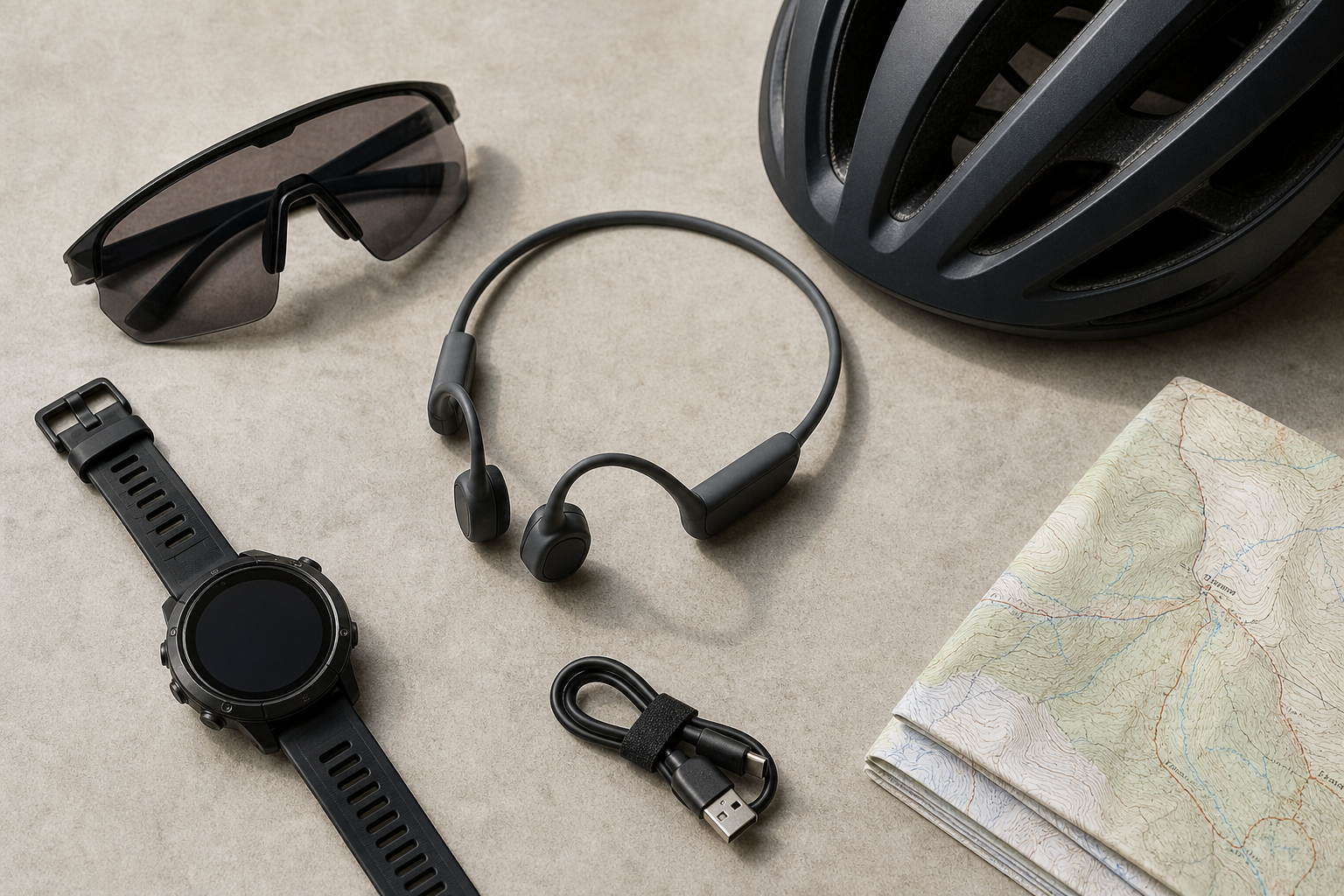
Start with your most common activity, not the longest feature list. A comfortable model for daily half-hour runs may be a better purchase than a more expensive one whose extra functions you rarely use.
- Test fit under realistic movement. Walk briskly, jog in place, turn your head, and look up and down. The transducers should stay positioned without excessive pressure. Choose a return policy that permits a meaningful fit assessment, checking hygiene-related conditions before purchase.
- Wear your usual gear. Bring glasses, sunglasses, a hat, and your helmet where relevant. Add a loaded hydration pack if its upper section or straps might touch the rear band.
- Match protection to exposure. Look for explicit guidance on sweat, rain, dust, swimming, rinsing, and saltwater. Follow cleaning instructions and allow charging contacts or ports to dry fully before charging.
- Budget battery life conservatively. Check the conditions behind the advertised runtime. Higher volume, calls, and other functions may reduce endurance. Leave a buffer beyond your longest planned outing, especially as the battery ages.
- Try the controls by touch. Can you pause quickly with sweaty fingers or gloves? Distinct physical buttons can be useful, but stiffness, placement, and accidental presses matter more than the control type alone.
- Buy connectivity features only when useful. Multipoint can help when switching between a phone and a computer. Onboard storage matters for swimming or phone-free playback. Neither is essential for everyone.
Check charging and long-term practicality
A proprietary magnetic cable may be convenient after a workout but frustrating to replace on a trip. USB-C can simplify packing, although connector type alone does not tell you charging speed. Our explanation of USB-C Power Delivery and everyday charging helps distinguish the plug from the charging capabilities behind it.
Also check warranty terms, replacement-cable availability, and battery service options. Sports headphones can be difficult to repair because of compact, sealed construction. The principles in our guide to electronics designed to be maintained and kept longer are useful here: ongoing support is part of value, even when the product is not modular.
Try bone conduction and air-conduction open-ear headphones with the same spoken passage and music track, each at a comfortable level. Compare speech clarity, contact pressure, stability, and leakage. Recheck comfort after an extended session rather than choosing solely on first impressions.
Are Bone-Conduction Headphones Safer? Listening Habits Still Matter
Bone conduction still stimulates the inner ear. Excessive listening levels and long exposure can damage hearing even when nothing sits inside the ear canal. Avoid treating the technology as permission to listen louder or longer.
There is no universal volume-slider percentage that guarantees safety across devices and recordings. Use a comfortable low level, take regular breaks, and pause rather than overpower loud surroundings. Remember that environmental noise contributes to your overall exposure, too.
Likewise, access to outside sound is not the same as awareness. An engaging conversation, audiobook, or workout cue can absorb attention even when your ears are physically open. You may still miss a vehicle, warning, or change in terrain.
- Set playback and route guidance before moving; stop somewhere appropriate before making complicated adjustments.
- Follow local laws, trail etiquette, race policies, and workplace rules.
- Do not treat open-ear headphones as hearing protection in loud environments.
- Choose no audio whenever the activity requires undivided attention.
If you develop persistent ringing, pain, dizziness, or changes in hearing, stop using the headphones and consult a qualified healthcare professional. Sudden hearing loss warrants urgent medical assessment.
Choose Open-Ear Audio That Fits Your Adventure
Bone-conduction headphones offer a useful alternative to sealed earbuds: open ear canals, a potentially stable fit, and convenient access to speech and workout cues. The compromises are real, including reduced bass, competition from surrounding noise, and possible pressure or vibration discomfort.
Start with your main activity, try the fit with your usual gear, and check protection and battery claims against actual use. Compare an air-conduction open-ear option before deciding. Above all, keep playback modest—and leave the audio off when the surroundings deserve your full attention.