








How USB-C PD 3.1 Is Expanding High-Power Portable Gear

How USB-C PD 3.1 Is Expanding the Possibilities of High-Power Portable Gear
USB-C has already made everyday charging simpler, but USB Power Delivery 3.1 takes the connector into much more demanding territory. With support for up to 240 watts, the standard is helping high-performance laptops, portable displays, compact power systems, and professional field kits move toward a more flexible, universal power model.
That does not mean every USB-C port can suddenly replace every charger. USB-C describes a connector; the actual charging capability depends on the device, charger, cable, and the Power Delivery profiles they share. Still, PD 3.1 gives manufacturers a standardized route to bring substantially more power through the same compact, reversible port used by phones, tablets, and many modern laptops.
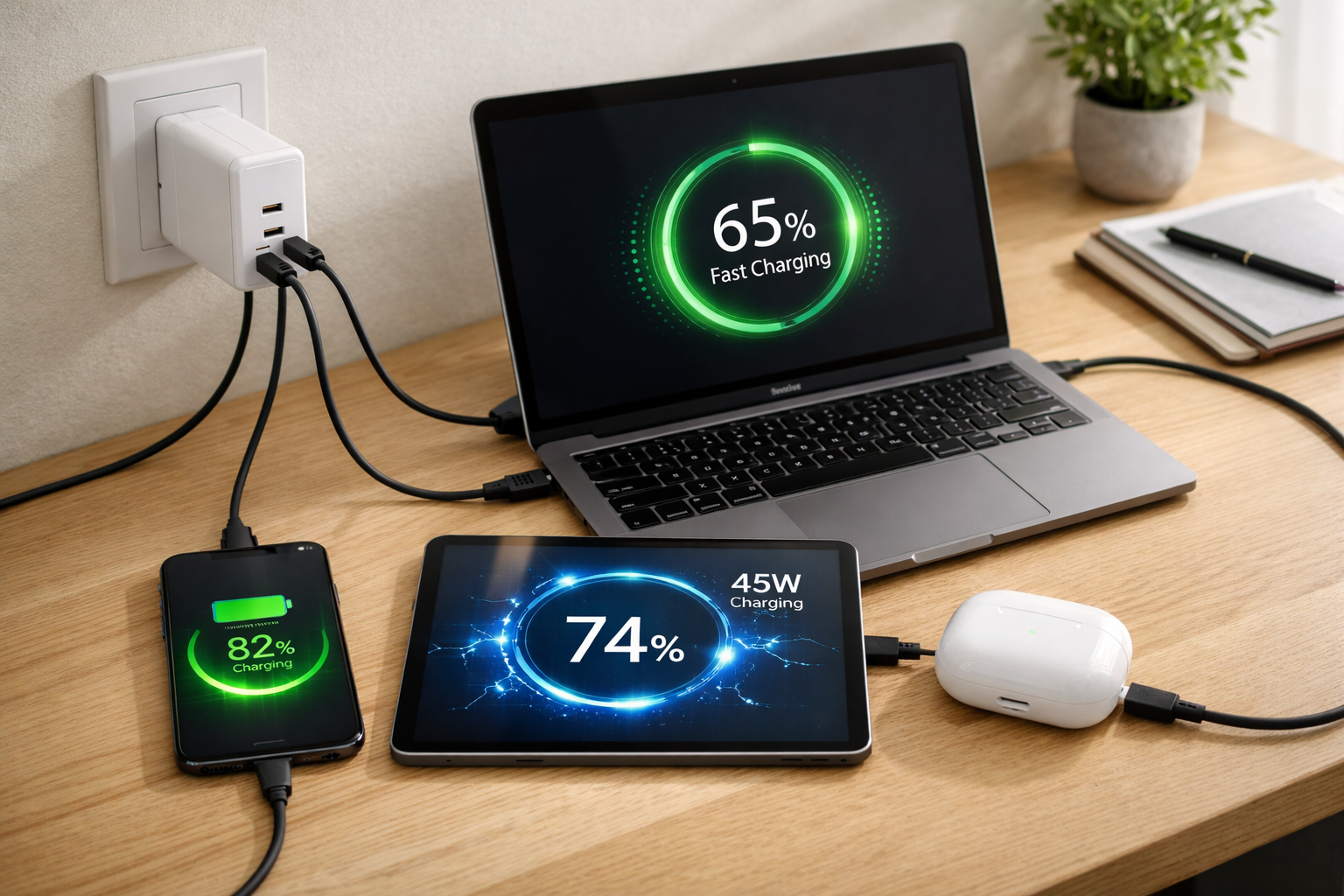
For people who work away from a fixed desk, the change is especially meaningful. A creator can carry one capable power supply rather than several bulky adapters. A technician can replenish compatible equipment from a portable battery system. A mobile workstation can be designed around a common charging ecosystem instead of a proprietary barrel plug. The opportunity is not merely “faster charging”; it is a more modular way to build and power portable workflows.
What Makes USB-C PD 3.1 Different?
Earlier USB Power Delivery implementations generally topped out at 100W, typically using 20 volts at 5 amps. That is enough for many ultrabooks, tablets, docks, and accessory-heavy setups. It can be limiting, however, for larger computers and equipment that need more sustained power while operating at full performance.
USB PD 3.1 introduces Extended Power Range, commonly called EPR. EPR adds higher-voltage options of 28V, 36V, and 48V. At up to 5A, the top profile reaches 240W of potential power delivery. In simple terms, the standard increases available wattage primarily by raising voltage while preserving the practical cable-current limit that USB-C systems use.
A PD 3.1 charger can still serve lower-power devices, but it only provides an EPR level when the connected device and cable support that level. A phone may draw a modest amount from a 240W charger, while a compatible workstation can request far more.
How power negotiation protects the connection
Power Delivery is designed around communication between the source and the sink. Before high power is delivered, the charger advertises its available capabilities and the device requests an appropriate profile. This is why connecting a small accessory to a powerful PD charger is ordinarily safe: the source does not simply force its maximum wattage through the port.
EPR adds additional requirements because higher voltage demands more deliberate cable and device design. The result is a system that can scale upward when the full chain is capable, while continuing to support ordinary lower-power USB-C charging behavior for a broad range of devices.
Watts are only one part of the story
It is easy to focus on the 240W headline, but usable power depends on the profile a product implements. A device may support PD 3.1 without needing 240W; it might accept 140W at 28V, for example. Likewise, a multiport charger may advertise a high total output while allocating a lower amount to any one port when several devices are connected.
- Source capability: The charger or battery must offer the desired PD 3.1 EPR profile on the port being used.
- Sink capability: The laptop, monitor, dock, or other device must be engineered to request and accept that profile.
- Cable capability: The cable must be rated and electronically marked for the intended current and EPR operation.
- System behavior: Shared-output chargers may redistribute power when more than one device is attached.
From 100W to 240W: A Major Step for Mobile Workflows
The leap from 100W to 240W matters because it reaches a class of portable equipment that has often remained tied to proprietary adapters. High-performance laptops with larger screens, powerful processors, dedicated graphics, or more aggressive charging requirements can consume well beyond the range that traditional USB-C Power Delivery could comfortably cover.
For these systems, a higher PD ceiling can make USB-C a realistic primary charging option rather than a low-power travel fallback. Manufacturers still decide how much power a product requires and whether it supports USB-C charging at all, but PD 3.1 gives them more room to design capable machines without automatically relying on a separate connector.

One power source, fewer compromises
Consider a remote editor moving between a studio, client office, hotel, and airport. A conventional kit may include a laptop brick, a monitor supply, a phone charger, a camera charger, and a collection of adapters. A carefully selected high-output USB-C charger cannot eliminate every one of those items, but it can consolidate a meaningful share of them.
That consolidation has practical benefits: less weight, fewer occupied outlets, simpler replacements, and easier cable management. It also supports more adaptable workspaces. Instead of building a setup around whichever proprietary power brick is available, users can select compatible chargers, power banks, docks, and cables according to the role they need to fill.
The value of 240W USB-C is not that every device needs 240W. It is that one widely recognizable connector can now cover a much larger range of power needs without abandoning lower-power compatibility.
Sustained work is the real test
High-wattage charging is most useful when a device must run demanding workloads while maintaining or refilling its battery. Rendering video, compiling software, operating multiple high-resolution displays, processing large photo libraries, or managing a live production setup can all increase system power draw. If the input power is insufficient, a laptop may charge slowly, hold its battery level, or reduce performance under load.
PD 3.1 does not guarantee maximum performance in every machine. Firmware, thermal limits, and manufacturer-specific charging policies still apply. But it provides the electrical headroom required for more portable workstations to operate without an immediate trade-off between mobility and available power.
Portable Gear That Benefits From Higher USB-C Power
Laptops are the clearest use case, but they are not the only one. As USB-C PD 3.1 adoption grows, higher-power charging can make many categories of portable equipment more cohesive. The most compelling setups tend to be those where several devices already travel together and where outlet access is unpredictable.
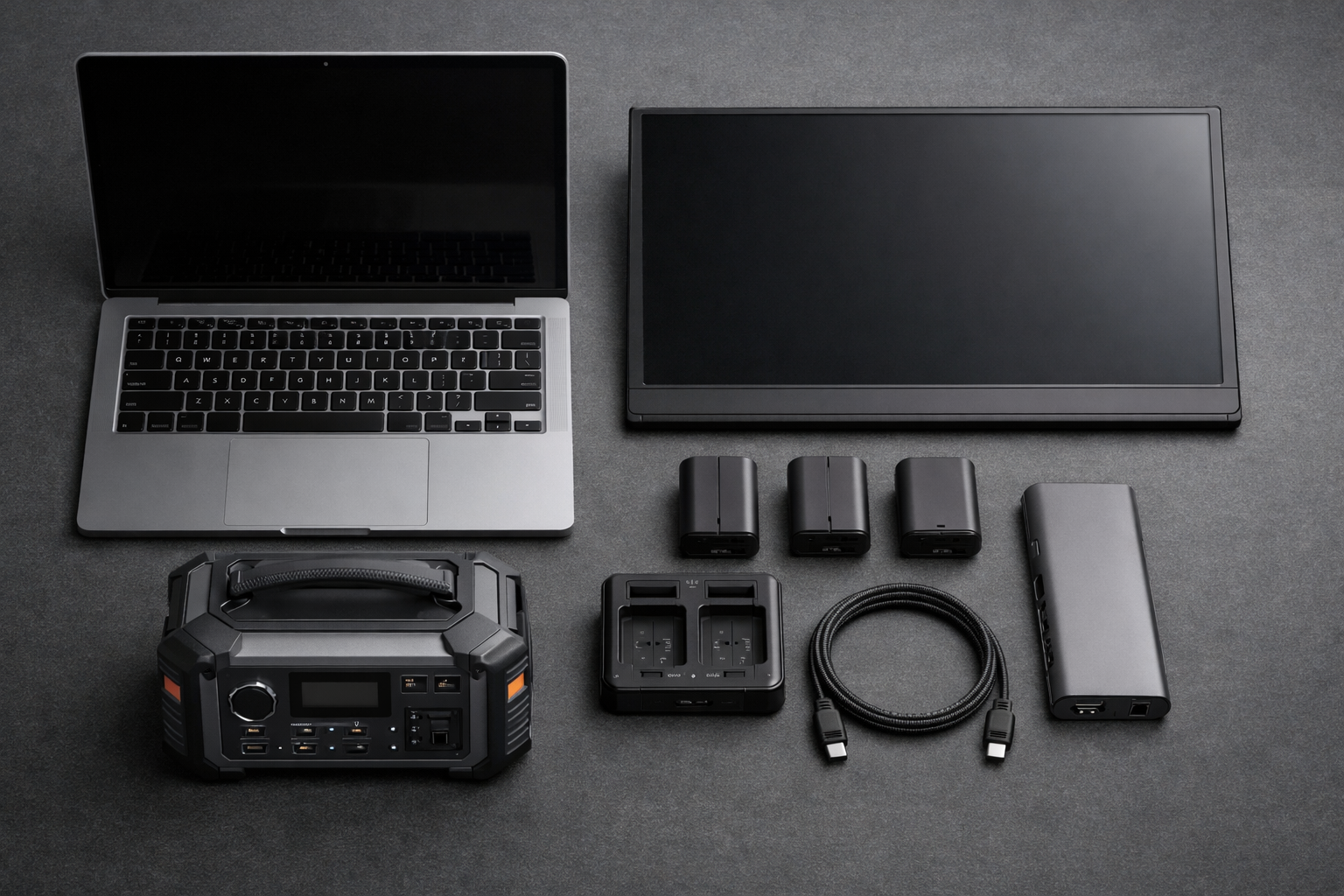
Performance laptops and mobile workstations
Systems with large displays, workstation-class processors, or discrete graphics can benefit from the added margin of EPR. Even when a manufacturer retains a dedicated charger for peak performance, USB-C PD 3.1 may create a much more useful travel-power option. A single compact charger can become viable for both the computer and lower-demand devices in the bag.
Portable monitors and docking stations
A portable monitor may draw power through USB-C while receiving video over the same cable. Add a dock, storage, Ethernet, audio gear, and an attached laptop, and the total power plan becomes more complex. Higher input capacity gives dock and display designers more flexibility, especially in setups built around a single-cable connection to a notebook.
Users should distinguish between data, video, and power capabilities. A cable that can charge at a high wattage may not offer the data speed or video mode required by a display. Conversely, a fast data cable is not automatically a 240W cable. Read each specification independently.
Field production and compact power systems
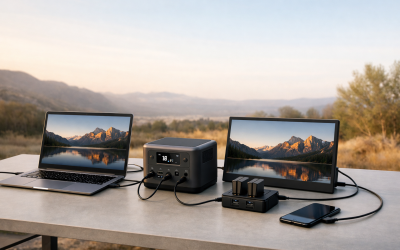
Photographers, videographers, survey teams, emergency-response crews, and mobile technicians often carry camera chargers, radios, lights, rugged tablets, and battery systems. Compact power stations and high-capacity batteries with high-output USB-C ports can make these kits easier to configure. The advantage is not that every piece of gear becomes USB-C overnight, but that compatible components can share one standardized power language.
Light mobility accessories and certain e-bike-related charging systems may also use USB-C in limited ways, though consumers should be cautious here. Larger battery packs have specific electrical and safety requirements, and USB-C PD 3.1 is not a universal substitute for every high-voltage mobility charger. Always follow the equipment maker’s approved charging guidance.
The best portable kit is based on documented compatibility. Start with the highest-demand device, verify its accepted USB-C input profile, then select a charger and cable that can supply it while meeting the needs of the rest of the setup.
Why Cables, Chargers, and Device Compatibility Matter
A USB-C connector can look identical across products with dramatically different capabilities. This is the central rule to remember when shopping for high-power gear: connector shape is not a specification. A port may support basic charging, high-speed data, video output, legacy PD levels, or PD 3.1 EPR—or some combination of these.
The cable is part of the power system
For a 240W connection, use a cable specifically rated for 240W or 5A EPR use and equipped with the required electronic marking. The cable’s e-marker chip communicates its capabilities to connected equipment. An older cable or a lower-rated 3A cable may still work, but it can limit the negotiated power level rather than enabling the charger’s full output.
Cable length, build quality, connector strain relief, and thermal performance also matter. A cable marketed with a wattage number should come from a reputable maker and clearly state its rating. Avoid treating an unmarked, no-name cable as interchangeable simply because its ends fit.
Read charger labels beyond the headline number
A charger labeled “240W” might mean one port can supply 240W, or it might mean the unit provides 240W in total across multiple ports. Its specification table should list output profiles such as voltage and amperage for each USB-C port. For a demanding laptop, verify the maximum output of the exact port you will use, both alone and when other devices are connected.
- Find the device’s documented USB-C charging input requirement or supported PD profile.
- Confirm that the charger offers a matching EPR profile on a single port.
- Select a certified, electronically marked cable rated for the target wattage.
- Check power-sharing rules if the charger will also run a phone, tablet, monitor, or accessory.
- Test the setup during a realistic workload, not only when the device is idle.
Choose certified, reputable hardware
USB Power Delivery negotiation is intended to make charging safe and predictable among compliant devices. Still, the quality of the implementation matters. Established manufacturers provide clearer specifications, thermal safeguards, warranty support, and better odds that claimed ratings have been validated. For expensive laptops and field equipment, a charger and cable are not the place to optimize solely for the lowest price.
A 240W charger paired with a non-EPR cable does not create a 240W setup. High-power USB-C works at the capability of the least capable link in the chain.
The Bigger Impact: Fewer Proprietary Chargers, More Flexible Power
PD 3.1 will not remove proprietary chargers immediately. Many devices do not require more than 45W, 65W, or 100W, and some high-performance products will continue to use specialized power supplies for the foreseeable future. But the standard changes the design conversation. It creates a credible common interface for equipment that once sat outside USB-C’s practical power range.
That can improve everyday ownership in subtle but meaningful ways. Replacement chargers are easier to source when a device supports standardized charging. Shared workspaces need fewer brick types. Travelers can decide which charger to bring based on an output profile rather than a particular connector shape. Organizations managing fleets of laptops and field tools can potentially simplify procurement and spares.
A better fit for evolving portable equipment
Portable gear is becoming more capable: brighter displays, faster processors, external GPUs and storage, compact production systems, and battery-powered professional tools all raise expectations for mobile work. Higher USB-C power does not solve every constraint, particularly battery capacity and heat, but it gives product designers a standardized foundation for meeting those demands.
For consumers, the near-term benefit is choice. A modest laptop may need only a compact 65W charger. A more demanding machine may need a 140W or 240W EPR model. Both can participate in a USB-C-based ecosystem when their documented profiles align. That scalability is the point: buy for the actual workload, while retaining more interoperability across the rest of the kit.
Do not buy 240W hardware merely because it is the largest number available. Buy the smallest reputable charger, cable, and battery solution that meets your highest verified device requirement with enough headroom for the way you actually work.
Conclusion: High Power Is Becoming More Portable
USB-C PD 3.1 expands Power Delivery from a convenient laptop-and-phone charging standard into a platform that can support a broader range of serious portable equipment. Its EPR profiles can provide up to 240W, opening the door for compatible workstations, display setups, power stations, and creator tools to rely on one compact connector more often.
The important qualifier is compatibility. A successful high-power setup requires a device that accepts the desired profile, a charger that provides it on the right port, and a properly rated EPR cable. When those pieces match, the result can be a lighter bag, a cleaner desk, fewer adapters, and more confidence when working far from a dedicated outlet.
Build a Smarter High-Power USB-C Setup
Before upgrading, compare your device’s input rating, your charger’s PD 3.1 output profiles, and your cable’s certified wattage. Start with the gear that needs the most power, confirm every link in the chain, and build outward from there for safe, reliable portable power.