










How Digital Product Passports Make Electronics Easier to Repair, Resell, and Recycle
How Digital Product Passports Can Transform Consumer Electronics
A phone, laptop, or pair of wireless earbuds should not become a mystery the moment it leaves the shop. Yet crucial details—what is inside, which parts fit, whether the battery has been replaced, how long software updates will continue, and how to dismantle the device safely—are often scattered, inaccessible, or lost altogether. Digital Product Passports can change that by giving devices a persistent, trusted record that follows them from first sale to second life and, eventually, material recovery.
What Is a Digital Product Passport?
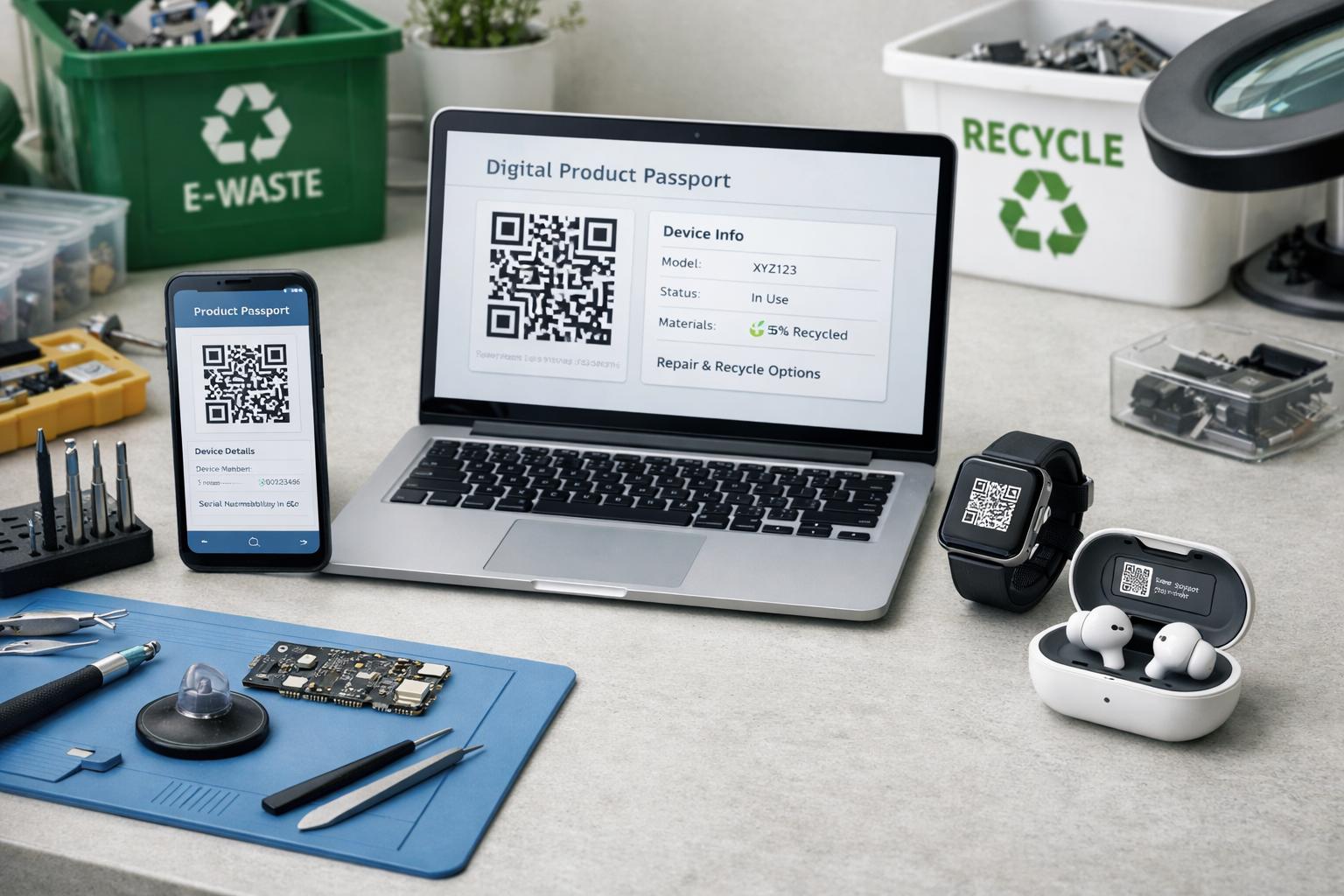
A Digital Product Passport, often shortened to DPP, is a structured digital record connected to a physical product. In consumer electronics, the connection may be made through a QR code, unique serial number, NFC tag, barcode, or another durable identifier. Scanning or entering that identifier can reveal information appropriate to the person using it: a consumer, repair technician, reseller, recycler, regulator, or manufacturer.
The key idea is not simply putting a PDF behind a QR code. A useful passport is a maintained data layer that links a specific device—or, where appropriate, a product model and its components—to reliable lifecycle information. It can combine data created at manufacturing with events that occur later, such as warranty claims, repairs, replacement parts, trade-ins, refurbishment, and final processing.
What a passport can contain
The exact data fields will vary by product category and access rights, but a well-designed electronics passport can include:
- Product identity: model, configuration, manufacturing date, batch information, and a verifiable device identifier.
- Component details: battery specification, display type, charger compatibility, storage and memory configuration, and replaceable modules.
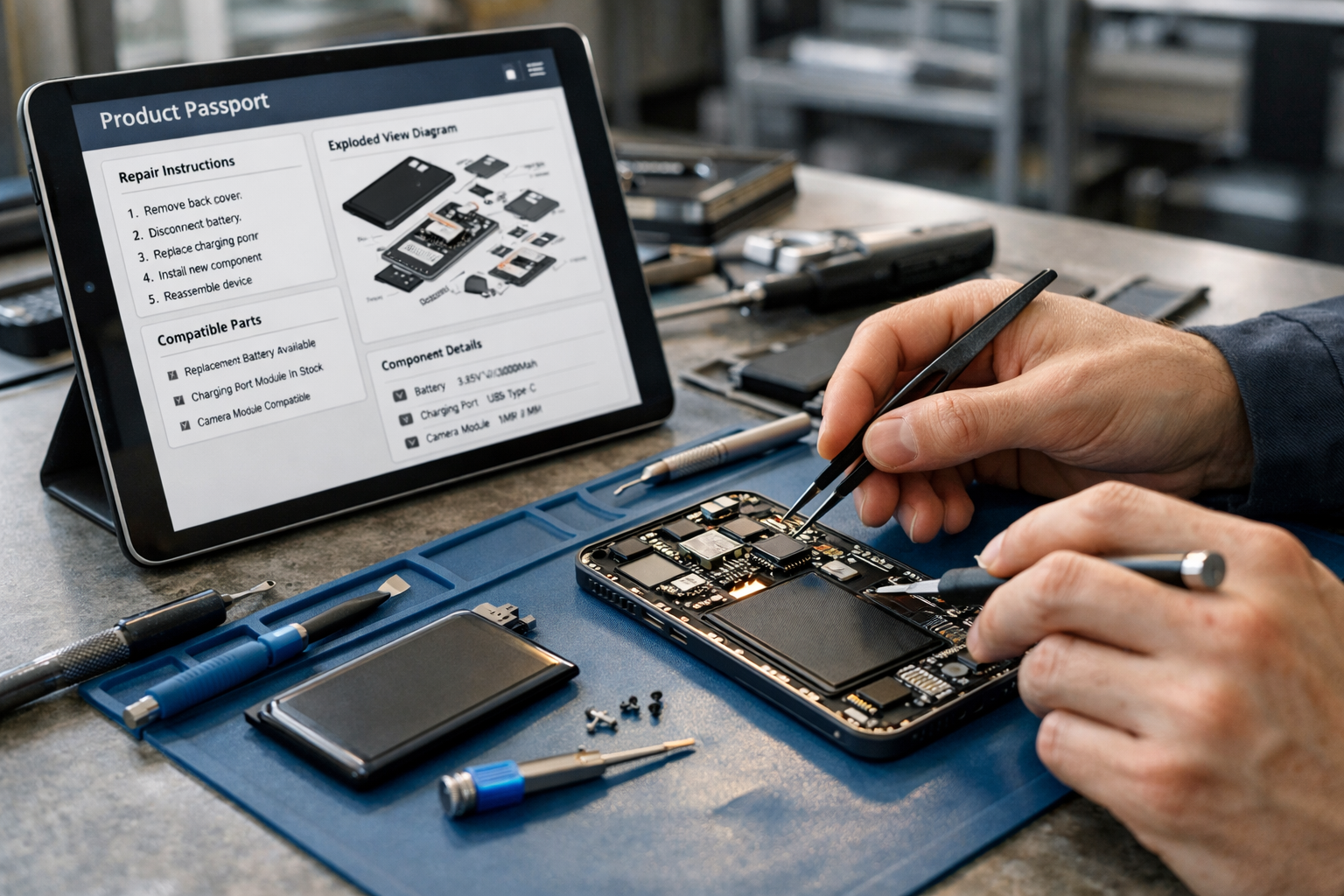
- Repair resources: service manuals, diagnostic codes, compatible spare-part numbers, tools required, and step-by-step disassembly instructions.
- Support status: warranty coverage, repair options, spare-part availability, software support commitments, and known safety notices.
- Lifecycle records: verified repairs, component replacements, battery-health readings where available, and refurbishment history.
- End-of-life guidance: material composition, battery handling requirements, hazardous-substance information, and approved recycling routes.
This information supports a more functional circular economy for consumer electronics. Rather than treating a device as a disposable black box, each participant can make a better decision based on usable evidence. A technician can fix it, a buyer can evaluate it, and a recycler can recover it more safely and effectively.
A product passport does not make a device repairable by itself. Its real value comes when accurate data is paired with repair-friendly design, accessible parts, long-term support, and clear rules for sharing information.
Key takeaway
Digital Product Passports keep critical product information available beyond the original point of sale. That continuity is what makes repair, resale, reuse, and recycling more practical at scale.
Making Electronics Faster and Easier to Repair
Repair begins with identification. A technician receiving a damaged device must often determine the exact variant, inspect prior work, identify the likely fault, locate documentation, and verify that a proposed replacement part is compatible. If any of those steps relies on incomplete labels or informal guesswork, the repair takes longer and the risk of mistakes rises.
A passport can simplify the first minutes of that process. By scanning the product identifier, a repair professional could confirm the device configuration and access the relevant service information. For consumers, the same system could surface basic self-service guidance: whether a battery is user-replaceable, where to find an authorized or independent repair provider, and what to back up before service.
Better data reduces avoidable repair friction
At a component level, accurate product data can shorten diagnosis and improve repair quotes. A passport may identify the correct battery chemistry and part revision, reveal whether a display assembly requires calibration after fitting, or flag a model-specific adhesive and screw layout. This helps repair providers avoid ordering an incompatible component or discovering a required procedure only after the device has been opened.
That matters especially for independent repair businesses. They frequently work across many brands, model generations, and regional variations. Consistent access to current repair data enables them to estimate labor more accurately, communicate likely outcomes clearly, and make decisions based on evidence rather than incomplete aftermarket listings.
Repairability becomes visible before a problem occurs
Passports can also help people compare products before purchase. Instead of vague sustainability claims, buyers could see practical indicators: whether the battery can be replaced, which components are commonly serviceable, how long spare parts are expected to remain available, and the planned window for operating-system and security support.
- Can the device be opened without destructive steps?
- Are batteries, screens, ports, and storage components separately replaceable?
- Will repair manuals and diagnostic information remain available over time?
- Are genuine and compatible parts clearly distinguished?
- Will software support continue long enough for the hardware’s intended life?
Transparent answers create pressure for better design choices. A device with a documented repair path is easier to keep in service, and keeping a working device in use is often the most resource-efficient outcome available.
Building Trust in the Secondhand Electronics Market
The used electronics market is constrained by an information gap. A seller may know that a laptop has had a new battery or a phone has received a screen replacement, but a buyer has little way to verify the claim. Conversely, a high-quality refurbished device can be undervalued when its history is difficult to prove. This uncertainty affects prices, creates disputes, and can discourage consumers from choosing pre-owned devices.
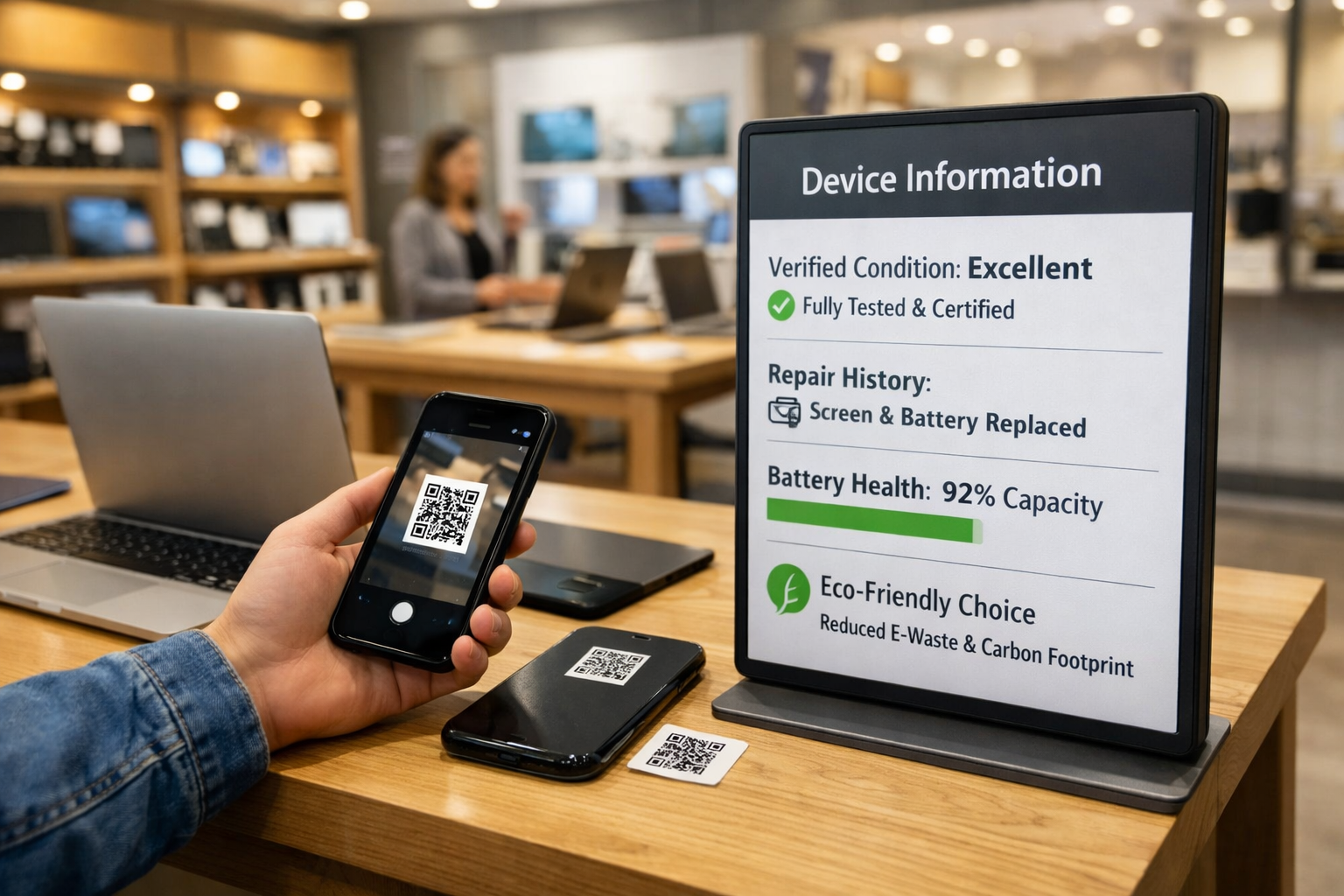
Digital Product Passports offer a route to more transparent resale. A verified record can show relevant facts without exposing unnecessary personal information: the device’s identity, whether it has been reported lost or stolen where such checks are lawful and available, repair dates, replacement component types, warranty status, and a standardized condition assessment.
From claims to evidence
For a reseller, passport data can support a more credible listing. Instead of simply describing a device as “excellent condition,” the business can state how that condition was assessed, whether the battery was tested, which parts were replaced, and whether those parts are genuine, certified, or compatible alternatives. The buyer can scan the identifier and review the information that matters before completing a purchase.
The records must be designed carefully. Ownership data should not expose former users, and a passport should never become a channel for tracking people. A good implementation separates personal account data from product history, uses permissioned access, and displays only the minimum necessary information for a transaction.
In resale, transparency is value. A documented maintenance history and verified component record can turn uncertainty into a reason to pay more for a device that has been responsibly maintained.
A more dependable trade-in and refurbishment workflow
Trade-in programs can use passport records to speed up intake and grading. A device can be matched to its correct configuration, checked against prior repair data, and routed appropriately: direct resale, light refurbishment, parts harvesting, or material recovery. Refurbishers can then add their own inspection and repair records, creating a continuous chain of evidence for the next owner.
This can lead to fairer residual values. Devices that have been repaired well, fitted with appropriate parts, and kept within a documented support window may deserve stronger offers than devices with unknown histories. In turn, consumers gain a clearer financial incentive to maintain devices instead of replacing them prematurely.
What buyers should be able to verify
A useful secondhand passport should make it easy to review device identity, condition grading criteria, battery status when available, replacement-part history, active warranty terms, and the remaining software-support period—without revealing the identity of prior owners.
Improving Recycling and Material Recovery
When a device cannot be reused or refurbished, information still has value. Electronics contain recoverable metals, plastics, glass, critical minerals, and components that may be suitable for harvesting. They can also contain batteries, adhesives, or hazardous substances that require specific handling. Without dependable product data, recyclers may need to rely on manual inspection, broad assumptions, or inefficient sorting processes.
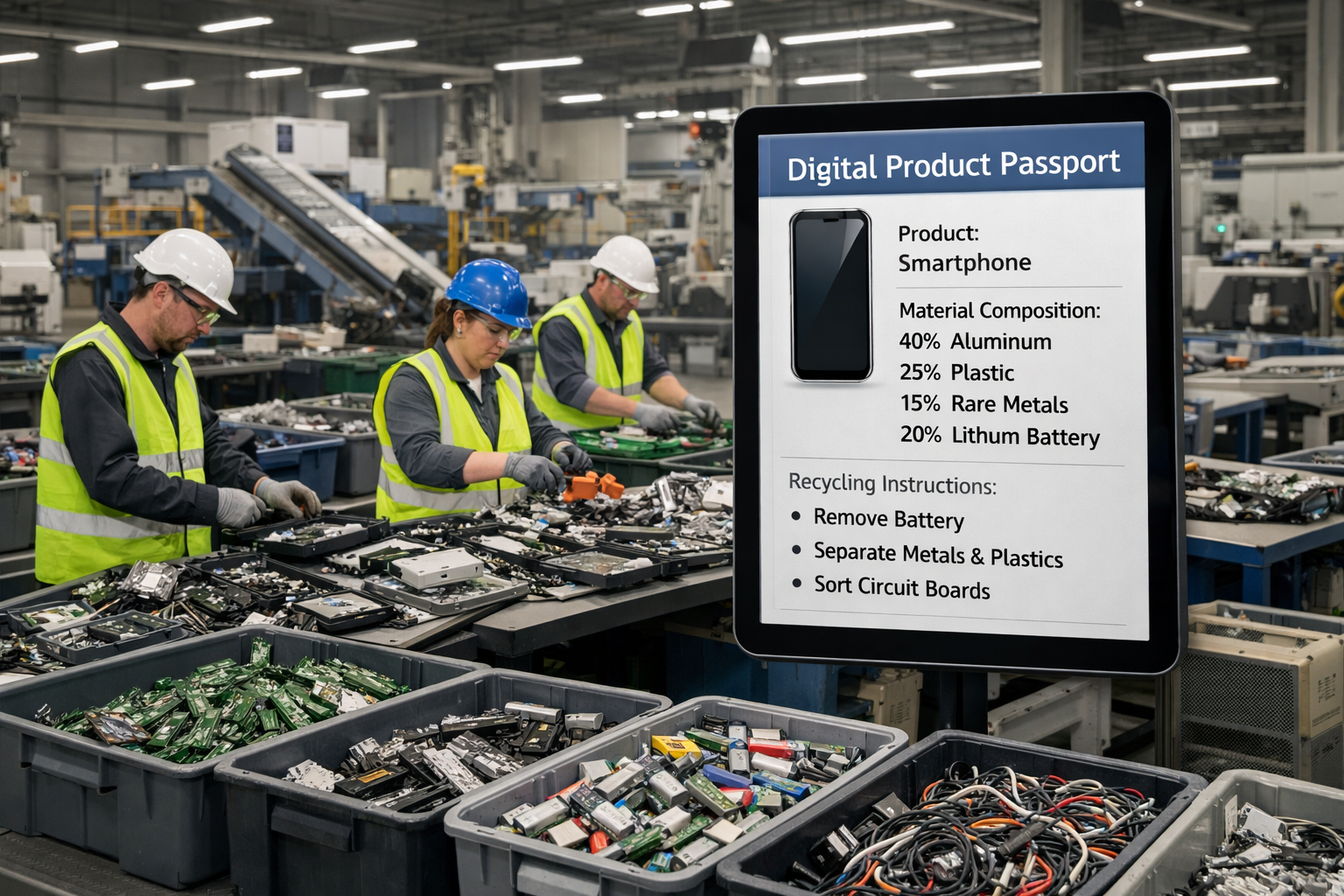
A Digital Product Passport can provide a clearer starting point. Before a device enters a processing line, a recycler may be able to identify its battery type, the location of energy-storage components, material composition, presence of regulated substances, and recommended safe-dismantling sequence. The result is a more informed choice between reuse, disassembly, component recovery, and material recycling.
Safer sorting, higher-value recovery
Battery information is particularly important. Damaged or incorrectly handled lithium-ion batteries can create fire and safety risks. Knowing the battery’s chemistry, location, removal method, and state-of-health indicators where available can help processors plan safer handling and separate batteries from other material streams earlier.
Detailed composition data can also improve recovery quality. If recyclers can distinguish material grades and component types, they can direct devices toward the processes most likely to preserve value. That may mean extracting reusable modules, recovering high-value circuit-board fractions, or separating plastics more effectively before downstream treatment.
Closing the data loop
Passports can help manufacturers understand what happens after sale. Aggregated lifecycle data may reveal how many devices are collected, repaired, resold, refurbished, dismantled, or recycled. It can also show recurring failure points and components that are rarely recovered. These insights can guide product redesign, spare-parts planning, collection programs, and recycled-material strategies.
The goal is not to track every device indefinitely for its own sake. It is to build reliable feedback loops. When a manufacturer understands why products leave use and where materials are lost, it can design the next generation to stay useful longer and return more effectively at end of life.
What Manufacturers, Retailers, and Consumers Need to Do Next
The value of a passport depends on the quality, accessibility, and longevity of its data. A QR code that leads to an expired webpage or a database that disappears when a model is discontinued does not support circularity. Every participant in the electronics ecosystem has a role in making product information dependable over the long term.
Priorities for manufacturers
Manufacturers should begin with consistent data practices. Product and component information needs common definitions, reliable identifiers, and structured formats that can be understood across service, resale, and recycling systems. They should also design devices with disassembly in mind and keep repair documentation current and accessible for the realistic service life of the product.
- Standardize the core record. Establish accurate model, component, materials, and support data at launch.
- Design for the information to be useful. Make key components identifiable, serviceable, and documented rather than permanently obscured.
- Support trusted updates. Allow repair and refurbishment events to be recorded with clear provenance and appropriate validation.
- Plan for long-term access. Maintain passport information through the expected use, resale, and end-of-life stages of the device.
Opportunities for retailers and marketplaces
Retailers can make passport data part of the customer experience, not merely a compliance feature. It can support trade-in valuations, warranty service, product comparison, refurbishment intake, and resale listings. Marketplaces can use verified data to establish clearer grading standards and reduce disputes over device condition or replacement parts.
The most effective customer-facing experience will be simple: scan a product identifier, see the information relevant to the decision at hand, and understand what can be verified. Behind that simple interaction, however, organizations need strong governance around authentication, privacy, data corrections, and role-based access.
Practical steps for consumers
Consumers do not need to become repair experts to benefit. When buying new or used electronics, scan available product identifiers and look for straightforward answers about repairability, parts, support, warranty, and condition. Keep invoices and repair records, especially if a device may be resold later. When the device finally reaches the end of its useful life, use verified instructions to remove personal data and select an appropriate collection or recycling route.
The standard to aim for
Information should be accurate, secure, interoperable, and available to the right person at the right moment. Consumers need clarity, repairers need technical depth, resellers need trustworthy condition data, and recyclers need safe material guidance.
A Clearer Lifecycle for Every Device
Digital Product Passports can make consumer electronics easier to repair, more credible to resell, and safer to recycle because they reduce the uncertainty that follows a device through its life. They connect design information with real-world service events, enabling better decisions at each handoff.
For repair, that means faster identification, compatible parts, and clearer instructions. For resale, it means verifiable condition and maintenance history. For recycling, it means safer dismantling and more informed material recovery. None of these outcomes is automatic, but together they create a powerful case for treating product data as essential infrastructure for a circular electronics economy.
Prepare Your Electronics Strategy for a More Circular Future
Digital Product Passports can turn product data into practical value for repair teams, resale programs, recyclers, and everyday device owners. Start by mapping the information already available across your products, then identify the gaps that prevent repair, reuse, and responsible recovery.